
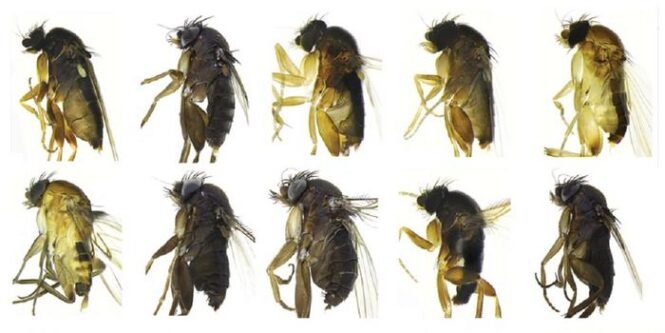
The researchers in this study concentrated on insects in Sweden. They collected flies from a total of 37 habitats at four different times of year. They ended up with 31,800 DNA samples to analyse and achieved very good results.
“For example, we found a total of 549 different potential species of scuttle fly. This is a surprisingly high density and diversity,” said Emily Hartop. Hartop works at the Department of Natural History, which is part of the Norwegian University of Sience and Technology (NTNU) University Museum.
Previously, only 374 of these species of scuttle fly (Phoridae) were known, meaning that 175 species were new to Sweden.
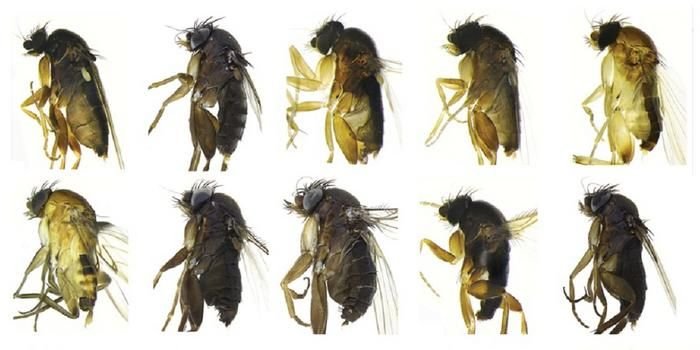
Credit
Illustration Kelsey Bailey NTNU
The source data also give researchers an opportunity to find out how different environmental variations affect the composition of species in an area.
“With regard to scuttle flies, we see that the prevalence of the different species is influenced by climate factors. For example, it appears that 29 per cent of the species respond positively to an increase in average temperature, while 18 per cent respond negatively,” said Hartop.
According to the Intergovernmental Science-Policy Platform on Biodiversity and Ecosystem Services (IPBES), the greatest threat to biodiversity is the loss of habitat, for example due to developments or the drainage of wetlands. The second biggest threat is the exploitation of species, such as hunting for bush meat, logging or overfishing. Then comes climate change, pollution and the spread of species to areas where they don’t belong.
Journal
BMC Biology
DOI
10.1186/s12915-024-02010-z
Method of Research
Observational study