
Research led by the University of Oxford has found that oceanographic connectivity (the movement and exchange of water between different parts of the ocean) is a key influence for fish abundance across the Western Indian Ocean (WIO). The findings have been published today in the ICES Journal of Marine Sciences.
Connectivity particularly impacted herbivorous reef fish groups, which are most critical to coral reef resilience, providing evidence that decision-makers should incorporate connectivity into how they prioritise conservation areas.
The study also revealed that, alongside oceanographic connectivity, sea surface temperature and levels of chlorophyll (the green pigment in plants that drives photosynthesis) strongly predict reef fish distribution and abundance in the WIO. Protecting reefs is essential in this area, particularly for rapidly growing local communities, which are highly dependent on reefs and vulnerable to the impacts of climate change.
Lead author Laura Warmuth (Department of Biology, University of Oxford) said: “It was striking that herbivorous fish – which are critical to reef resilience – were particularly strongly impacted by ocean connectivity. Efficient conservation area prioritisation should include connectivity for decision making regarding marine protected area management across country borders. This is particularly relevant in the human-pressured WIO region, where annual bleaching is predicted on most coral reefs by mid-century, even under optimistic climate change scenarios.”
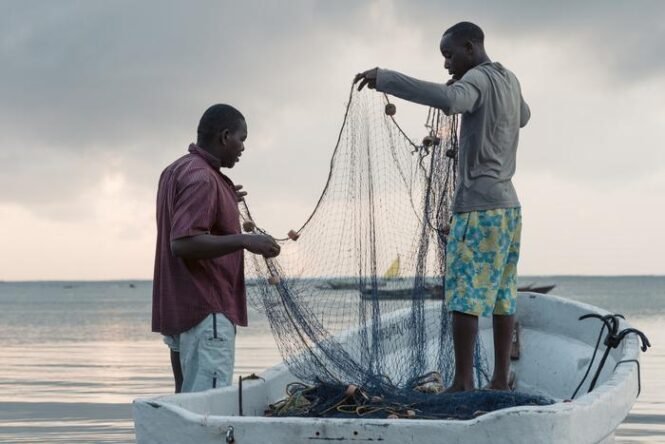
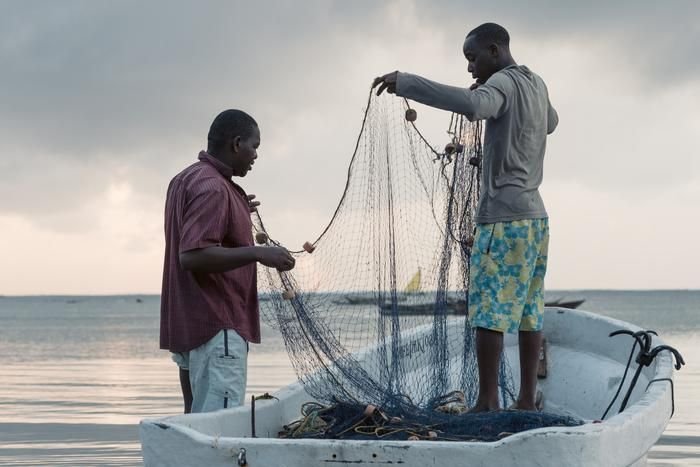
Coastal communities are highly dependent on reefs for food security, with small-scale fisheries providing up to 99% of protein intake and around 82% of household income in the WIO. Home to some of the world’s poorest communities and seeing rapid population growth, locals are at an ever-increasing risk of climate change, which has the potential to devastate reefs with successive coral bleaching.
While sea surface temperatures are rising around the world, temperatures in the Indian Ocean are increasing faster than other tropical oceans – and it is one of the most vulnerable ocean regions to thermal stress. Fish diversity is central to reef resilience, providing several key services to reefs by their different feeding patterns such as feeding on algae which can compete with corals.
The researchers developed a metric of proportional oceanographic connectivity to simplify complex oceanographic models, allowing them to incorporate this element into ecological models. Typically, across the study reef sites, medium connectivity levels were associated with higher fish abundances, rather than high levels. High connectivity may help with larvae dispersal but can come with side effects, such as stronger wave exposure or increased dispersal of pollutants or invasive species.
The study revealed that sea surface temperatures and chlorophyll levels also had a strong influence on the abundance of fish species at all levels of the food chain.
Credit
CORDIO East Africa
https://academic.oup.com/icesjms/advance-article/doi/10.1093/icesjms/fsae125/7821003