LabNews Media LLC

LabNews: Biotech. Digital Health. Life Sciences. Pugnalom: Environmental News. Nature Conservation. Climate Change. augenauf.blog: We observe abuses

Author archive: LabNews Media LLC

LBEG Exclusive Interview: Gypsum mining in the southern Harz Mountains – Authority cites legal grounds, biodiversity hotspot disappears

By | October 29th 2026

Der weltweit einzigartige Gipskarst und Biodiversitäts-Hotspot wird durch den fortschreitenden Gipsabbau nach Ansicht von Kritikern unwiederbringlich zerstört. Die zuständige Genehmigungsbehörde, das Landesamt für Bergbau, Energie und Geologie (LBEG) in Hannover, sieht sich dagegen verwaltungstechnisch im Recht und verweist auf geltende Paragraphen. Ein exklusives Interview mit dem LBEG-Pressesprecher Eike Bruns erscheint am Freitag auf dem Wissenschaftsportal pugnalom.io. Darin konfrontiert… Continue reading


Leopoldina and Chinese Academy of Sciences publish statement on climate and health

By | October 29th 2026

Die Deutsche Nationale Akademie der Wissenschaften Leopoldina und die Chinesische Akademie der Wissenschaften (CAS) haben eine gemeinsame Erklärung zu Klima, Gesundheit und Biodiversität unterzeichnet. Wie die Leopoldina mitteilte, bekräftigen beide Akademien darin ihre Zusammenarbeit bei der Erforschung klimabedingter Gesundheitsrisiken und setzen sich für einen gerechten Datenaustausch sowie den verantwortungsvollen Einsatz moderner Technologien ein. Die „SfF2026-Erklärung“ wurde von Leopoldina-Präsidentin… Continue reading

Study maps global threats to freshwater biodiversity

By | October 29th 2026

Landwirtschaft, Staudämme und landwirtschaftliche Abwässer stellen weltweit die größten Bedrohungen für die Süßwasserbiodiversität dar. Europa und Nordwestafrika sind einer Studie der McGill University zufolge die am stärksten betroffenen Regionen. Die Ergebnisse erschienen in „Science“ (DOI: 10.1126/science.aeb7910). Die Forschenden nutzten eine Kartierungsmethodik, die zuvor für terrestrische Arten eingesetzt wurde, um zu identifizieren, wo Süßwasserarten bedroht sind und welche menschlichen… Continue reading

Genetic diversity of songbirds in China has declined sharply.

By | October 29th 2026

Die Fragmentierung von Lebensräumen führt bei Vögeln möglicherweise deutlich schneller zum Verlust genetischer Vielfalt als bislang angenommen. Eine Studie an 62 Singvogelarten in China ergab, dass alle innerhalb von etwa 50 Jahren fast die Hälfte ihrer genetischen Vielfalt eingebüßt haben – darunter Arten, die als häufig und wenig gefährdet gelten. Die Arbeit von Ri Liu und Kollegen erschien… Continue reading

Schools increasingly affected by forest fire smoke

By | October 29th 2026

Kinder in den USA sind einer neuen nationalen Studie zufolge zunehmend Luftverschmutzung durch häufiger auftretenden Waldbrandrauch ausgesetzt. Einige Schulen und Kindertagesstätten hätten Schwierigkeiten, die Luft in ihren Innenräumen sauber zu halten. Die in „Environmental Research“ veröffentlichte Studie untersuchte Daten zur Luftqualität in den USA von 2006 bis 2023 (DOI: 10.1016/j.envres.2026.125883). „Die durchschnittliche Zahl der Tage mit Rauchbelastung an… Continue reading

Why some frogs escape amphibian extinction

By | October 28th 2026

Amphibians are the most threatened vertebrates on Earth; 41 percent of species are considered endangered. In the highlands of Central and South America, a deadly fungus has wiped out a large portion of the once diverse amphibian populations. But in the Sierra Nevada de Santa Marta, an isolated mountain range in northern Colombia, amphibians still thrive, including at least 48 species, 25 of which… Read more »

Special feed could strengthen bee colonies after blueberry pollination.

By | October 28th 2026

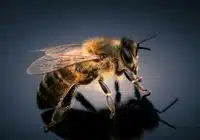
A novel feed could help strengthen honeybee colonies after pollinating blueberries. This is suggested by a study from Washington State University and the company H4Bees, published in the journal "Entomological Communications" (DOI: 10.37486/2675-1305.ec08034). According to the study, feeding with the product Nano-B-Feed led to a statistically significant increase in the size of bee colonies compared to a control group. Washington produces more… Read more »

New brown frog species discovered in Chongqing

By | October 28th 2026

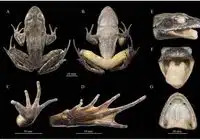
A new species of brown frog has been discovered in the Chinese city of Chongqing. As reported by a research team from Southwest University and other institutions in "Asian Herpetological Research," the species was described based on morphological and molecular characteristics (DOI: 10.3724/ahr.2095-0357.2026.0016). In 2025, the researchers collected eight adult frogs and one clutch of eggs in the Yintiaoling Nature Reserve and the Hongchiba National Forest Park in Wuxi County. The… Read more »

Australian landmass contributed to the biodiversity of Southeast Asia.

By | October 28th 2026

A landmass that broke away from northwestern Australia around 150 million years ago and drifted northward over the following 100 million years has laid the foundation for the exceptionally diverse tropical forests of Southeast Asia, according to a study. As Curtin University announced, an international team examined more than 3.000 fossils preserved in amber from Myanmar and found… Read more »

Biodiversity hotspots in southwest Germany are losing diversity

By | October 28th 2026

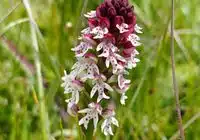
Particularly biodiverse areas in southwestern Germany are losing plant diversity, according to a long-term study. Researchers from the Stuttgart State Museum of Natural History and the University of Hohenheim have analyzed more than 2,5 million plant observations spanning five decades. The results were published in "Global Change Biology" (DOI: 10.1111/gcb.71150). The study is based on the "Floristic Mapping of Baden-Württemberg," coordinated by the State Museum of Natural History and one of the oldest citizen science projects in Europe. Between 1970 and 2023… Read more »