
Tag Archives: Generate more

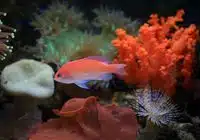
Marine research: Typical underwater sounds can fuel life
By | October 9th 2026

Two new field studies—one on coral larvae, the other on fish larvae—have for the first time tested how underwater sound simultaneously affects both fish and coral larvae, combined with other restoration technologies such as living materials and 3D-printed settlement surfaces. The research site was Kōneōohe Bay in Hawaiōi, off the island of Oōahu, and several spawning events were observed in 2023 and 2024. “We have in… Read more »
Climate change is altering plankton: AI is supposed to find out what this means for food chains.

By | October 6th 2026

Ecosystems are changing all over the world. Two groups of plankton form the basis of the marine food web, and they are so closely linked that a change in one can have a significant impact on the other. As the ocean warms, both are changing. "My research asks how they are changing, which species are present and how… Read more »

The Baltic Sea is in bad shape: Is phosphorus, not nitrogen, the deciding factor?

By | October 2th 2026

For decades, phosphorus was considered the most important nutrient limiting biological production in the Gulf of Bothnia. A new study led by researchers at Umeå University now shows that this is fundamentally changing. The Bothnian Sea is becoming increasingly nitrogen-limited, while the Bothnian Plain is developing in the same direction. The nitrogen-to-phosphorus ratio influences which organisms thrive in the… Read more »

Nanoplastics in the sea: Study shows enormous pollution for the first time

By | July 10, 2025

Plastic particles smaller than one micrometer are distributed worldwide. A research team from the UFZ, Utrecht University, and the NIOZ marine research institute (NL) searched for nanoplastics in the North Atlantic. The results show that tiny plastic particles can be found in all depth zones between the temperate and subtropical zones of the ocean. The amount is… Read more »

GEOMAR: Artificial oxygenation of waters is no substitute for nutrient reduction and climate protection

Approaches to oxygen enrichment have proven successful in lakes, but their potential side effects must be carefully investigated before they are used in the ocean. This is the conclusion reached by researchers from GEOMAR and Radboud University in the Netherlands. In an article in the journal EOS, they warn: While technical measures can mitigate damage in a limited time and location, they are not without their long-term consequences… Read more »

New computer model can more accurately simulate food webs in the ocean

By | April 11, 2025

Marine food webs are highly complex. Until now, researchers have been unable to accurately assess how climate change, overfishing, and other threats affect them. Scientists at the Helmholtz Centre Hereon in Geesthacht have now achieved a breakthrough. They have developed a new computer model that allows food webs to be simulated more precisely than ever before. The work, published in the journal Nature Ecology &… Read more »

Light pollution leads to a significant increase in blue-green algae growth

By | April 9, 2025

Light pollution, which illuminates the night sky as skyglow, promotes the growth of blue-green algae (cyanobacteria) and stimulates nutrient cycling in lakes. This is shown in a recent study by the Leibniz Institute of Freshwater Ecology and Inland Fisheries (IGB), which is part of the largest field experiment to date on the effects of light pollution on lakes. Everyone is familiar with it: the light dome, which is clearly visible from afar, indicating where cities are brightly lit at night… Read more »

Oxygen in the Baltic Sea: Two types of salt water inflows determine the amount

By | April 4, 2025

Researchers at Kiel University (CAU) have demonstrated in a recent study that there are two different types of saltwater inflows into the Baltic Sea, which differ in their nature and thus also in their impact on oxygen supply. These inflows arise from different weather conditions and current patterns and determine the composition of the respective tributaries. This provides a better understanding of why… Read more »

Germany also lives far beyond its means when it comes to fish

By | April 2, 2025

Last year, 12,1 kg of fish and seafood were consumed per capita in Germany, according to preliminary figures from the Federal Office for Agriculture and Food (BLE) in its current Fish Supply Balance 2024 [1]. Fish is particularly popular in Germany at Easter and is traditionally on the menu for many people on Good Friday. But what many don't know: In purely mathematical terms… Read more »

Deep-sea mining: States demand research into unforeseeable consequences

By | March 11, 2025

Pressure is mounting on the International Seabed Authority (ISA) to adopt regulations for deep-sea mining. While some ISA member states are hoping for a swift start, a growing number of countries are calling for more time to study the environmental impacts of resource extraction and develop an appropriate regulatory framework. How could such a postponement be legally structured, and what political consequences would it have? Read more »
