Tag Archives: Climate change

AI is driving up electricity consumption and resource consumption.

By | October 18th 2026

The energy consumption of data centers is growing significantly faster worldwide than overall electricity consumption. According to the International Energy Agency (IEA), data centers accounted for approximately 415 terawatt-hours in 2024, representing about 1,5 percent of global electricity demand. Since 2017, this consumption has increased by around 12 percent annually – more than four times faster than total electricity consumption. The IEA's baseline scenario… Read more »

Satellites detect methane clouds almost without interruption in clear weather.

By | October 18th 2026

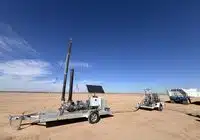
Researchers have demonstrated in the largest controlled test to date of methane monitoring from space that special sensors can detect methane clouds almost completely in clear weather. The results, published on October 14 in Nature by an international team, set a benchmark for satellite systems that regulatory authorities, environmental organizations, and companies are increasingly using to detect leaks and large methane sources and to monitor emissions of this potent greenhouse gas… Read more »

Very few construction companies know their carbon footprint.

By | October 18th 2026

Diesel, electricity, cement, gypsum, truck tolls, waste disposal: A CO₂ surcharge is now included in the prices of these items. Construction companies pay for their CO₂ emissions through this surcharge, but only five percent of construction companies in Germany know their actual CO₂ footprint. This is the conclusion reached by researchers at the Technical University of Dresden in a representative study. They surveyed 601 companies nationwide in the winter of 2025/2026… Read more »

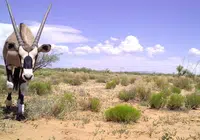
Oryx antelopes could spread significantly in the southwestern United States due to climate change.

By | October 12th 2026

The majestic African antelopes, known as oryx, have roamed the southwestern United States since their introduction in the 1960s and 1970s. Originally brought to New Mexico as game animals, the oryx quickly established themselves and spread over 100 kilometers from their initial introduction site. Researchers at the University of Illinois Urbana-Champaign attribute this to their extraordinary adaptations to… Read more »

Climate change: The robustness of a desert algae is expected to help make crops more resilient.

By | October 2th 2026

A single-celled green alga from the sand dunes of the Negev Desert has, within just a few years, become an important model organism in modern photosynthesis research. Chlorella ohadii helps researchers better understand the adaptability of plants to extreme environmental conditions. These findings could contribute to making crops more resilient to heat, drought, and other consequences of climate change. Haim Treves, Professor of Plant Metabolism… Read more »

Study sheds light for the first time on many aspects of urban heat

By | September 30, 2026

Urban heat is more than just a matter of temperature. It can affect how people sleep, work, move around the city, and dress—and even how safe or comfortable they feel in public spaces. However, these everyday consequences often remain invisible in conventional studies of urban heat. A new study by an interdisciplinary team from Julius-Maximilians-University Würzburg, the… Read more »

El Niño events are the strongest they have been in 1000 years

By | August 27, 2026

ANN ARBOR, August 27 (LabNews Media LLC) – El Niño events of the past four decades have been stronger than any event in the roughly 1000 years prior, according to a study from the University of Michigan. They have increased in intensity by almost 40 percent compared to pre-industrial times, an international team reported Thursday in the journal Science (DOI: 10.1126/science.ady2660). The… Read more »

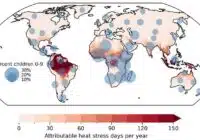
Climate change exposes up to 560 million children to an extra month of dangerous heat.

By | August 27, 2026

Brussels – Due to human-induced climate change, up to 560 million children aged zero to nine worldwide will experience at least one additional month of dangerous heat stress. This corresponds to 43 percent of this age group. The analysis by Rosa Pietroiusti and Wim Thiery from the Vrije Universiteit Brussel was published in Science Advances (DOI: 10.1126/sciadv.aeb3232). The strain is higher than in any… Read more »

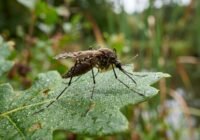
Malaria: Anopheles species in Europe – current overview

By | August 26, 2026

Numerous Anopheles species occur in Europe. The genus comprises approximately 420 species worldwide; in Europe, about 15–20 species or species complexes are relevant. Many of these belong to the difficult-to-distinguish Anopheles maculipennis complex. The most important potential malaria vectors are still present, even though autochthonous malaria has been eradicated in most European countries since the 1960s/70s. Important species and complexes: 1. Anopheles maculipennis complex (historically the most important… Read more »

Trees hardly adapt to prolonged drought.

By | August 24, 2026

Guangzhou – Forest trees only slightly alter their physiological properties during prolonged drought. This is shown by a global analysis of 40 diarrhea reduction experiments published in the Proceedings of the National Academy of Sciences (PNAS) (DOI: 10.1073/pnas.2622754123). A team led by Xingyun Liang and Qing Ye from the South China Botanical Garden of the Chinese Academy of Sciences investigated 24 characteristics of water transport… Read more »