Tag Archives: Ocean

Reef protection: Research team identifies the world's most beautiful fish communities
By | June 20, 2025

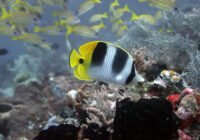
An international research team led by the University of North Carolina Wilmington (UNCW) and with the participation of the Leibniz Centre for Tropical Marine Research (ZMT) has studied reefs worldwide to find out where the most beautiful fish communities are found and what explains these patterns – an important topic, since the beauty of the fish is a non-material contribution of reefs to… Read more »
Analysis: US use of the oceans and their environmental impacts

By | April 27, 2025

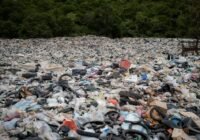
The oceans cover approximately 71 percent of the Earth's surface and are of central importance to the global climate, biodiversity, and the human economy. The United States, with its extensive coastline along the Atlantic, Pacific, and Gulf Coasts, is among the largest users of marine resources. This use includes fishing, shipping, offshore energy production, tourism, and deep-sea mining, but has significant… Read more »

Bacteria control the reproduction of jellyfish

By | April 9, 2025

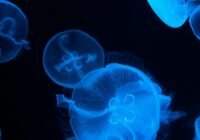
Microbiologists at Kiel University have demonstrated that the asexual reproduction of the moon jellyfish is largely controlled by bacterial products. Beta-carotene, produced by microbes in the jellyfish's natural microbiome, plays a key role in this process. Without these microorganisms, the so-called strobilation process—the transformation of the polyp into young medusae—comes to a standstill. This results in developmental disorders… Read more »

Florida: Researchers believe phytoplankton bloom is the cause of dolphin deaths

By | April 7, 2025

In 2013, eight percent of the bottlenose dolphins (Tursiops truncatus) living in the Indian River Lagoon in Florida died. Investigations have now revealed that the dolphins may have starved because vital habitats for nutritious prey were destroyed by a phytoplankton bloom. This bloom was caused by the accumulation of fertilizers, pesticides, sewage from septic tanks, and other byproducts of human activities… Read more »

“Mollusk of the Year 2025” has been chosen: Octopus wins the race

By | April 4, 2025

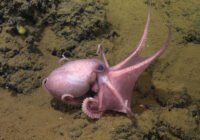
The deep-sea octopus Muusoctopus has won the title of "International Mollusc 2025." In the public online vote, Muusoctopus received the most votes, beating out three sea snails and a mussel that were also finalists in the competition. This joint initiative of the Senckenberg Society for Natural Research and Unitas Malacologica, the global society for mollusc research, took place for the fifth time this year… Read more »

Germany also lives far beyond its means when it comes to fish

By | April 2, 2025

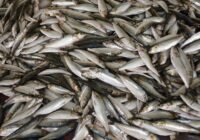
Last year, 12,1 kg of fish and seafood were consumed per capita in Germany, according to preliminary figures from the Federal Office for Agriculture and Food (BLE) in its current Fish Supply Balance 2024 [1]. Fish is particularly popular in Germany at Easter and is traditionally on the menu for many people on Good Friday. But what many don't know: In purely mathematical terms… Read more »

Deep-sea mining: States demand research into unforeseeable consequences

By | March 11, 2025

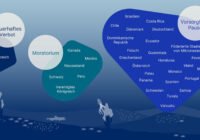
Pressure is mounting on the International Seabed Authority (ISA) to adopt regulations for deep-sea mining. While some ISA member states are hoping for a swift start, a growing number of countries are calling for more time to study the environmental impacts of resource extraction and develop an appropriate regulatory framework. How could such a postponement be legally structured, and what political consequences would it have? Read more »

Paint particles from offshore wind turbines spread in the sea

By | March 11, 2025

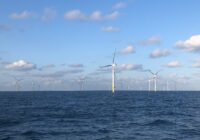
In the coming decades, the expansion of offshore wind farms will lead to the construction of numerous new structures in the seas. In the Ostend Declaration, the North Sea coastal states set themselves the goal of achieving a wind energy capacity of 300 gigawatts in the North Sea by 2050. This corresponds to approximately 20.000 new wind turbines. The planned expansion of wind farms also raises questions regarding environmental impact. From… Read more »

Expansion of the Panama Canal in 2016 forced the immigration of invasive fish

By | February 24, 2025

The Panama Canal is a potential passage for invasive fish species, transporting them from one ocean to another. Researchers from the Leibniz Institute of Freshwater Ecology and Inland Fisheries (IGB), the Free University of Berlin, the Smithsonian Tropical Research Institute in Panama, and Harvard University in the US compared the fish communities of Gatun Lake in the Panama Canal's water corridor before and after the 2016 canal expansion: Since the construction work… Read more »

Eating elephant seals provide insights into fish abundance in the Pacific

By | February 14, 2025

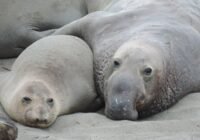
For the past 60 years, marine biologists at UC Santa Cruz have been observing the behavior of northern elephant seals that come to the nearby Año Nuevo Marine Reserve. Because the elephant seals gather on the beach in their thousands, generations of researchers have been able to compile more than 350.000 observations of over 50.000 animals. This long-term research project thus possesses extensive historical and real-time data on… Read more »