
Pressure is mounting on the International Seabed Authority (ISA) to adopt regulations for deep-sea mining. While some ISA member states are hoping for a swift start, a growing number of countries are calling for more time to research the environmental impacts of resource extraction and develop an appropriate regulatory framework. How could such a postponement be legally structured, and what political consequences would it have? A team of researchers led by Pradeep Singh from the Research Institute for Sustainability (RIFS) analyzes this in the journal "Ocean Development & International Law."
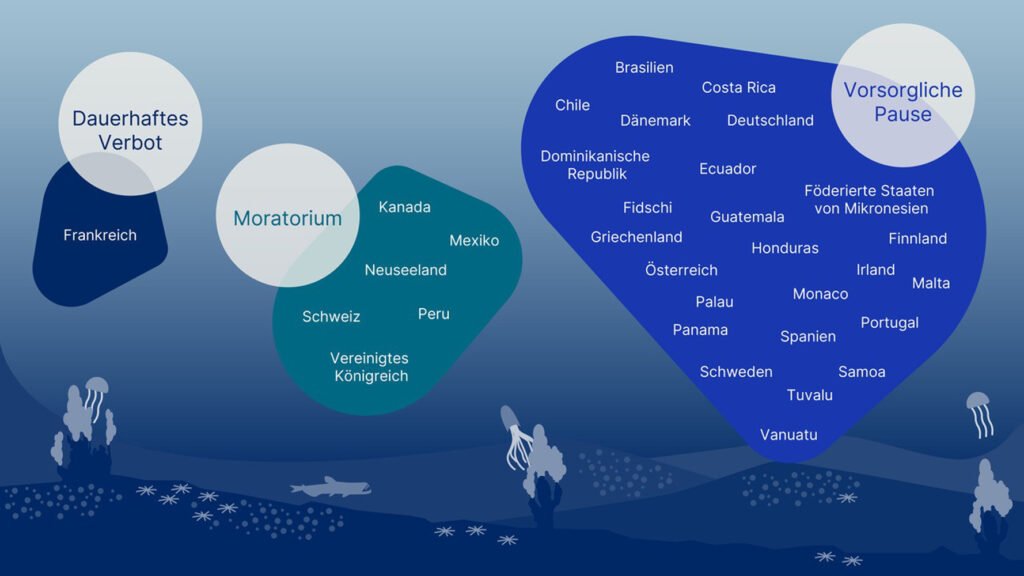
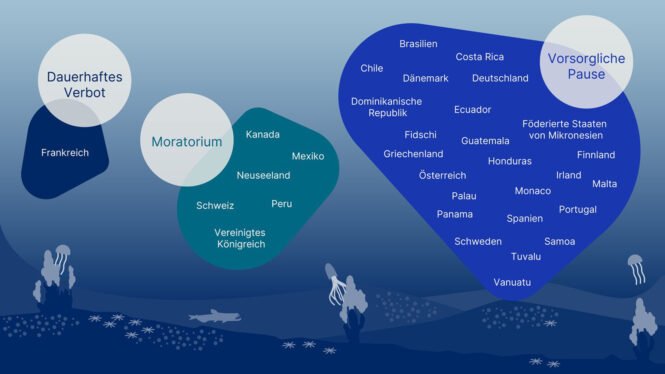
A significant number of the ISA's 169 member states have called for a precautionary pause or moratorium on deep-sea mining . Many were likely compelled to do so when the island nation of Nauru triggered a treaty provision in 2021 known as the "two-year rule." This provision obliges the ISA to develop and adopt regulations for deep-sea mining within two years. However, the agency failed to issue regulations before the deadline. Many states and observers are concerned that applications for resource extraction could now be submitted without any regulatory framework in place.
Since open questions still need to be discussed further, appropriate legal measures are required to delay resource extraction. Environmental concerns are at the forefront of calls for a moratorium or precautionary pause on deep-sea mining, but there are other gaps that need to be closed before mining activities can be properly regulated, assessed, and authorized. These relate to research, technology, regulation, institutional and procedural ambiguities, and other governance issues.
According to the researchers, the legal basis for a pause in deep-sea mining clearly exists in international law, as states have many obligations and responsibilities that must be met before such activities can be responsibly resumed. "There are more similarities between the terms 'precautionary pause' and 'moratorium' than differences. The impact is more important than the name or terminology," says Pradeep Singh. Both a pause and a moratorium in the ISA could—in line with the precautionary approach—effectively delay the transition from exploration to exploitation.
The authors describe a moratorium as a formal and binding halt. It carries considerable weight in international law and typically requires a formal agreement or resolution. Given the interests at stake and the ISA's tendency to work on a consensus basis, this may be difficult to achieve in the near future.
A precautionary pause may be considered a legally weaker measure, as it may be based on informal agreements and has softer parameters. However, for pragmatic reasons, the ISA may prefer this, as it may face less resistance and would maintain the intention to further develop the necessary framework and define acceptable parameters for future application. The option of a moratorium could then be considered at a later date if it becomes apparent that a fit-for-purpose legal framework for the responsible management of extraction activities is not achievable. The researchers point out that the position of the ISA Council and many states already makes it clear that commercial mining should not begin in the absence of regulations, and that more time and knowledge are needed to develop a strong, enforceable, and robust framework.
However, the authors acknowledge that the decision to delay could also have unforeseen consequences .
Given the many open issues that still need to be negotiated and the lack of scientific evidence that could serve as a basis for decision-making, a conclusion to the negotiations this year seems unlikely. “It is inevitable that the roadmap will have to be revised,” says Singh. The negotiations would be further delayed if an application for exploitation is submitted during the year without a ruling in place. Regardless of the terminology or label used, postponing the commencement of exploitative activities until the conditions are met is a logical and responsible course of action.
original publication
Singh, P., Jaeckel, A., & Ardron, JA (2025). A Pause or Moratorium for Deep Seabed Mining in the Area? The Legal Basis, Potential Pathways, and Possible Policy Implications. Ocean development and international law, 56(1), 18-44.
also read
Seabed: Drastic impacts of human activity persist for years | Pugnalom
Urgent appeal from the European marine research community | Pugnalom


