
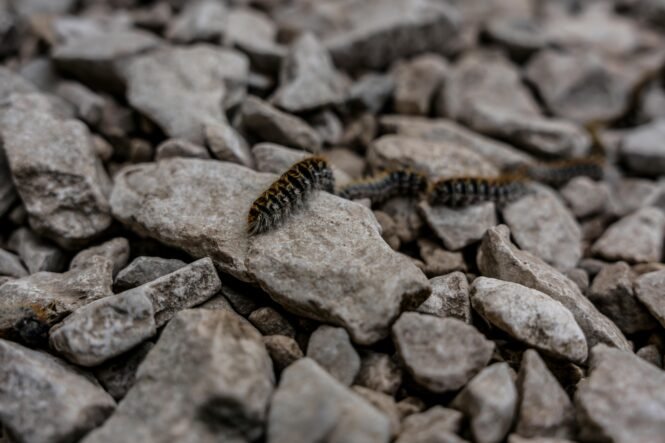
The PHENTHAUproc early warning system is now available nationwide for the daily assessment and forecasting of the dangers posed by the oak processionary moth (OPM, Thaumetopoea processionea L. ) to both oak tree vitality and the health of humans and animals. This free, publicly accessible web application provides comprehensive information on oak bud break and OPM development, thus supporting monitoring for risk assessment and the planning of regulatory countermeasures.
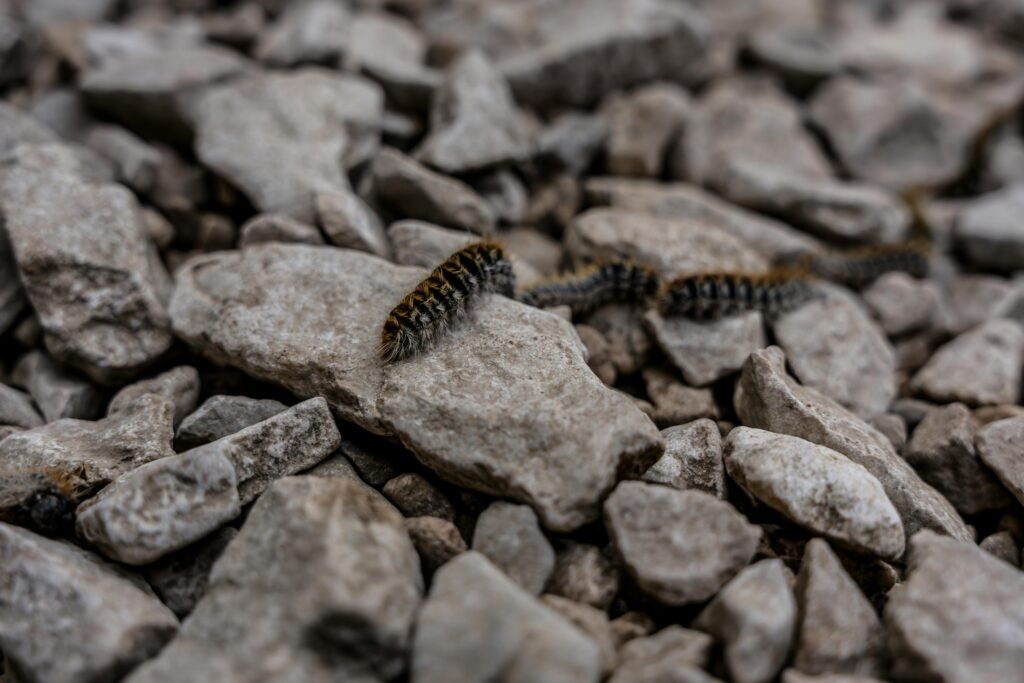
The online early warning system "PHENTHAUproc – Phenological Modeling of Thaumetopoea processionea ," jointly developed by the Baden-Württemberg Forest Research Institute (FVA) and the University of Natural Resources and Life Sciences Vienna (BOKU) and hosted by the German Meteorological Service (DWD), uses temperature-based methods to calculate the phenological development of the oak processionary moth (OPM) and its host tree species, the pedunculate oak (Quercus robur L.), on a daily basis and with a forecast of up to seven days in advance. The foundations for this app were laid in the ModEPSKlim project.
The digital information system serves practical applications in both plant protection and human and animal health protection. It consists of several phenology models for the various developmental stages of the EPS and oak bud break. A hazard map for the whole of Germany is available at a spatial resolution of 1 × 1 km pixels, with daily phenology data and forecasts based on DWD measurement and forecast data. In addition, detailed information is available for each pixel.
The modeling of larval and pupal development is used throughout the year to estimate potential defoliation by the caterpillars and the increasing health risk posed by the larval stinging hairs (setae). In addition to instructions for professional monitoring of the oak processionary moth, the online tool provides guidance on when appropriate preventive or mechanical control measures are appropriate, depending on the phenological development of the oak processionary moth and the host tree.
This free tool is aimed at practitioners in forestry and tree care, forest owners, authorities, companies, recreational facilities, and the general public. The models contribute to improving risk management in dealing with EPS and are generally applicable beyond Germany for the entire EPS distribution area in Central Europe.
The development of the PHENTHAUproc early warning system to practical readiness is largely based on the results of the ModEPSKlim research project (Model-based Risk Assessment of the Oak Processionary Moth in Climate Change), which was completed in 2020. Among other things, the project resulted in a demo version of the online tool.
Background
The occurrence of the oak processionary moth in Central Europe has increased sharply since the early 1990s. As a result of climate change, the processionary moth is considered a persistent pest with fluctuating population densities in forests and oak-covered green spaces in rural and urban areas.
As a result of mass reproduction of the EPS with repeated defoliation by the caterpillars and subsequent infestation of the weakened trees with pests such as jewel beetles or honey fungus, there is a risk that oak trees will die.
The stinging hairs of the EPS larvae pose serious health risks to humans and animals. They can cause severe skin and respiratory irritation, even leading to allergic shock.
The ModEPSKlim research project was funded from 2016 to 2020 by the Forest Climate Fund jointly funded by the Federal Ministry of Food and Agriculture (BMEL) and the Federal Ministry of the Environment, Nature Conservation, Nuclear Safety and Consumer Protection (BMUV) through the German Agency for Renewable Resources (FNR). The results were incorporated into the development of the PHENTHAUproc early warning system. The Forest Climate Fund was discontinued in 2024.
Part of the data for the modeling was obtained between 2014 and 2015 as part of the project "Climate change and new health risks: Elucidation of the health hazard potential of the oak processionary moth: Exposure and impact assessment" (funding code 371262203); funded by the Federal Ministry for the Environment, Nature Conservation, Building and Nuclear Safety (BMUV) through the Federal Environment Agency (UBA).
Further information
Link to the early warning system PHENTHAUproc
Publication
Halbig, P., Stelzer, AS, Baier, P., Pennerstorfer, J., Delb, H., & Schopf, A. (2024). PHENTHAUproc–An early warning and decision support system for hazard assessment and control of oak processionary moth (Thaumetopoea processionea). Forest Ecology and Management, 552, 121525, online
also read
Bavarian forest protection team keeps an eye on peeping toms and weirdos | Pugnalom
Urban forests reduce heat-related mortality | Pugnalom


