
Yesterday, a consortium of the Federal Ministry for the Environment, Nature Conservation, Nuclear Safety, and ten other institutions announced their intention to examine Germany's soils for biodiversity in the research project "Basic Survey of Soil Biodiversity" (BioDive4Soil). The goal is to define "good biological soil condition" and identify significant deviations. Along with collecting data on earthworms, springtails, mites, nematodes, fungi, and bacteria, influencing factors will also be recorded. According to a recent press release, in contrast to the extensive knowledge available, for example, on aquatic ecosystems, information for assessing the biological soil condition and its changes over time has been completely lacking to date.
In fact, the world of microorganisms in the soil is largely unknown. The only thing that is certain is that 60 percent of the earth's total biodiversity is found in the world's soils, and that a handful of healthy soil is home to significantly more organisms than the number of people on Earth—currently over eight billion. These organisms ensure that plants grow and nutrient cycles function at all. Regardless of whether it's about soil fertility, the soil's rainwater or carbon storage capacity, or its essential function as a nursery for insects: the fact is that soil has been shamefully abused and exploited, and that many consider it a virtually inexhaustible, eternal resource. It is therefore high time to devote significantly more research, more attention—and more respect—to the topic of soil.
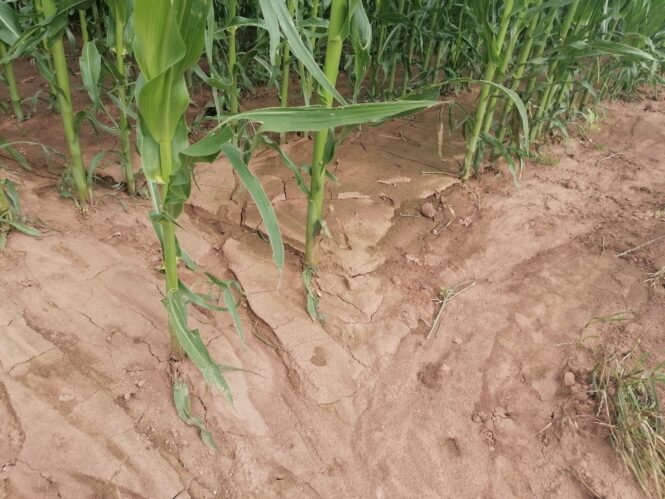
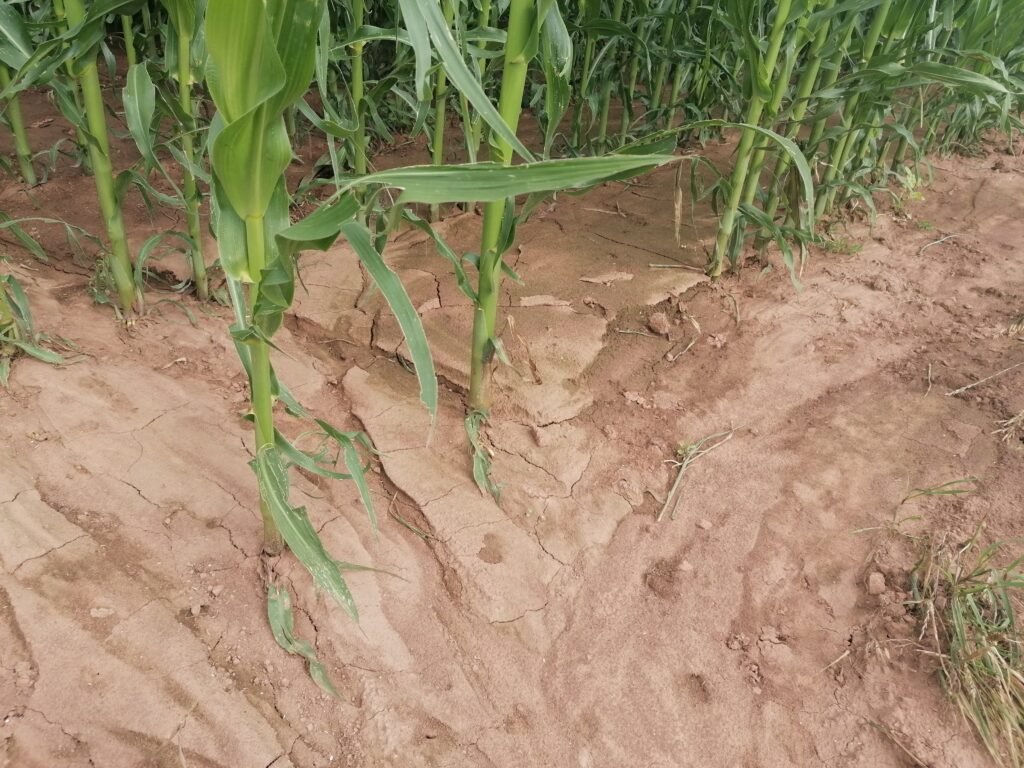
The most significant cause of increasing soil degradation is conventional agriculture with its pesticides , synthetic fertilizers , monocultures , intensive tillage and soil compaction , and the destruction of field margins, copses, hedges, and orchards. Unrestrained land sealing and climate change also contribute to its deterioration.
Here are some scientific studies on the relationship between soil management and soil organisms:
- A systematic review in npj Biodiversity (2024) compared 35 alternative practices (e.g., no-till, cover crops, organic fertilization) with conventional methods and found that alternative practices promote biodiversity overall. Earthworms, for example, consistently benefited because these practices maintain soil structure. At the same time, soil bacteria showed positive responses to organic fertilization. Intensive tillage, on the other hand, reduced the numbers of both larger soil organisms such as earthworms and smaller ones such as springtails. The researchers assume that the destruction of fungal biomass by tillage plays a crucial role in this.
- A comprehensive meta-analysis A total of 54 studies show that pesticides significantly reduce the biodiversity and abundance of soil-dwelling organisms such as earthworms, mites, springtails, and insects. Particularly strong effects are seen when multiple active ingredients and insecticides are used, even at recommended dosages.
- A report published in January 2025 Study shows that a high diversity of pesticides massively alters the composition and function of soil microbes. Specialists dominate, while generalists and the complexity of microbial networks decrease—with consequences for nutrient cycling and soil fertility.
- The use of synthetic fertilizers reduces the diversity and activity of important soil organisms such as mycorrhizal fungi, springtails (Collembola) and mites. Organic fertilization, on the other hand, promotes biodiversity and activity of soil fauna. A long-term study in China also showed that organic fertilization increases the total number and diversity of soil animals (e.g., oribatid mites (Oribatids), Collembola, green algae (Mesostigmata), while mineral fertilization has hardly any positive effects in older stands.
- Monocultures lead to a depletion of soil microbial communities. Specialized microorganisms dominate, while diversity and thus the soil's resistance to disease and stress decreases. Continuous use of the same crop depletes certain nutrients, promotes specific pathogens, and weakens the balance in the soil ecosystem.
- Studies show that diverse crop rotations can increase microbial biomass and activity in the soil by up to 112% (carbon) and 58% (nitrogen) compared to monocultures. The soil's ability to utilize nutrients also increases significantly.
- Soil sealing by materials such as asphalt or concrete also has significant negative effects on soil organisms, researchers have shown in a further study In unsealed soils, significantly more and more active microorganisms live. When the soil is sealed (e.g., by roads or buildings), the amount of organically bound carbon and nitrogen decreases sharply – the basis of life for bacteria and fungi. At the same time, microorganisms in sealed soils work less efficiently. Their enzymes are less active, which means that important soil processes proceed more slowly or can even come to a standstill. The significantly lower water content in sealed soils is also crucial. The resulting dryness further harms soil organisms.
Sources
Biodiversity: Pesticides have widespread, harmful effects on soil fauna
Effects of Conventional and Organic Agricultural Techniques on Soil Ecology – JournalQuest
How do monocultures impact soil health and biodiversity? | TutorChase
How Does Monoculture Negatively Impact Life in Soil? – The Environmental Literacy Council


