
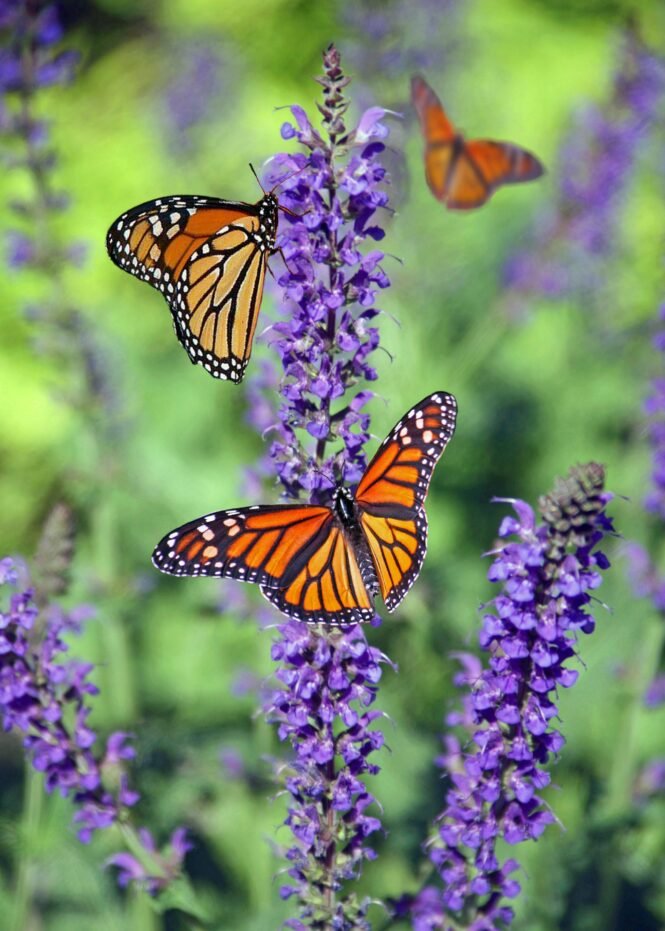
Researchers at the Technical University of Darmstadt and the Helmholtz-Zentrum Dresden-Rossendorf have developed a revolutionary technology: flexible robotic wings moved by magnetic fields. Inspired by the efficiency and adaptability of the monarch butterfly 's wings , they enable precise movements without electronics or batteries. This bio-inspired development could fundamentally change environmental monitoring, rescue operations, and biomedical applications.
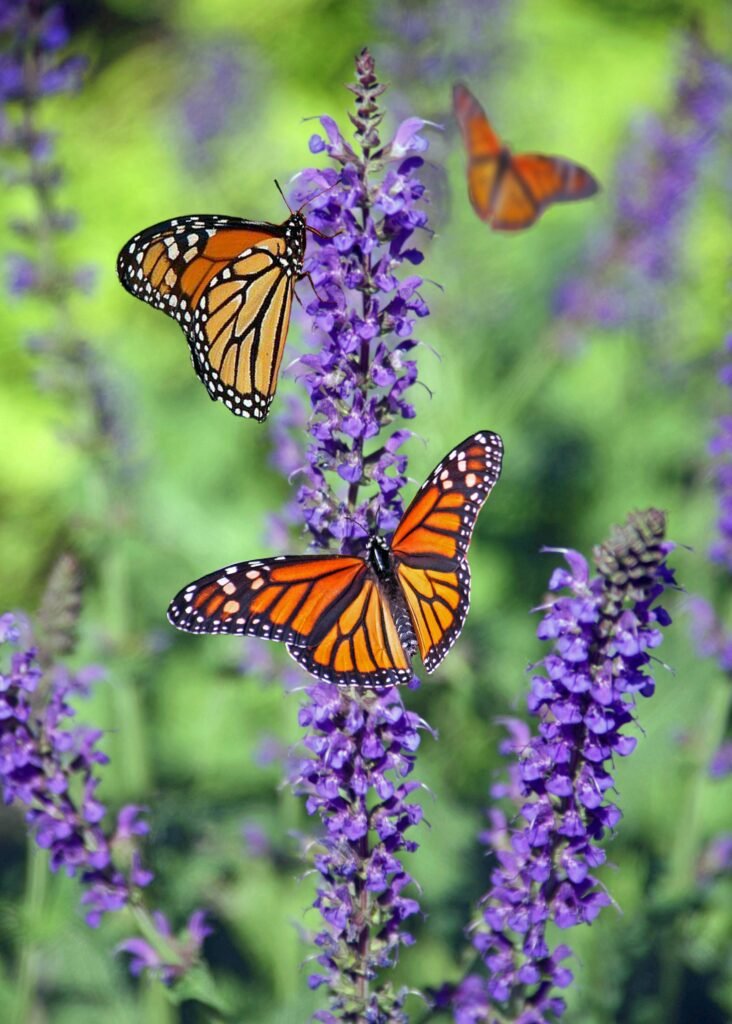
Monarch butterflies are known for their outstanding endurance and adaptability. They travel thousands of kilometers annually on their migrations between Canada and Mexico. The key to this feat lies in their unique wings, which allow the insects to fly energy-efficiently through a combination of active movement and passive flexion. These characteristics served as inspiration for the development of magnetically powered robotic wings.
The team, led by Professor Oliver Gutfleisch (Institute of Materials Science at TU Darmstadt) and Dr. Denys Makarov (Helmholtz-Zentrum Dresden-Rossendorf), built wings from a flexible plastic in which magnetic particles were embedded. External magnetic fields cause these particles to move, causing the wings to bend and mimic the movements of a butterfly's flight.
The development process was anything but simple: Twelve different wing designs were initially produced using 3D printing. Some designs included vein structures modeled on the natural wing veins of monarch butterflies. The goal was to use a combination of finite element analysis and experiments to determine how these patterns affected the mobility and efficiency of the wings.
The results were recently published in the journal "Advanced Intelligent Systems." They show that larger wings with vein structures are particularly adaptable, robust, and easier to bend. "The biggest challenge was to print ultra-thin, flexible structures that are also robust enough to withstand the stresses," explains Kilian Schäfer, one of the study's lead authors.
The potential applications of magnetic wings are diverse. In the environmental field, such "winged" robots could be used, for example, to monitor pollinator populations or conduct air quality studies. Because the wings allow for small and energy-efficient designs, such robots would be ideal for entering disaster areas, where they could be used for search and rescue.
The focus of the study was to develop flexible magnetic wings that function without electronic components. However, the new approach can also be applied to other shape-shifting robots. For example, the newly developed technology opens up possibilities for medicine: Lightweight robots with precisely controllable movements could be used in minimally invasive surgery, for example, for operations on delicate tissues. Furthermore, the principles of bio-inspired robotics could be applied in the development of artificial muscles or smart materials that can change their shape as needed.
Further research is needed before the new technology can be applied. "Current wings still require external magnetic fields, but future developments could integrate miniaturized magnetic field generators to enable autonomous movements," explains Muhammad Bilal Khan, also lead author of the study. The team aims to explore how modifications in the magnetic field enable the complex control of movements and flight paths.
?
original publication
Muhammad Bilal Khan, Kilian Schäfer et al., Bioinspired Design, Fabrication, and Wing Morphing of 3D Printed Magnetic Butterflies, Advanced Intelligent Systems (2024). DOI: aisy.202400620
https://advanced.onlinelibrary.wiley.com/doi/full/10.1002/aisy.202400620
This work was supported by the German Research Foundation (DFG), Project ID No. 405553726, Collaborative Research Center/Transregio 270 (https://www.tu-darmstadt.de/sfb270/about_crc/index.en.jsp), and the Research Training Group 2761 LokoAssist (https://www.tu-darmstadt.de/lokoassist/home_lokoassist/start_lokoassist/index.de.jsp), funding code 450821862, financially supported.
also read
Why robots can't (yet) keep up with animals | Pugnalom
Drone can study insects from a distance of 100 meters | Pugnalom


