
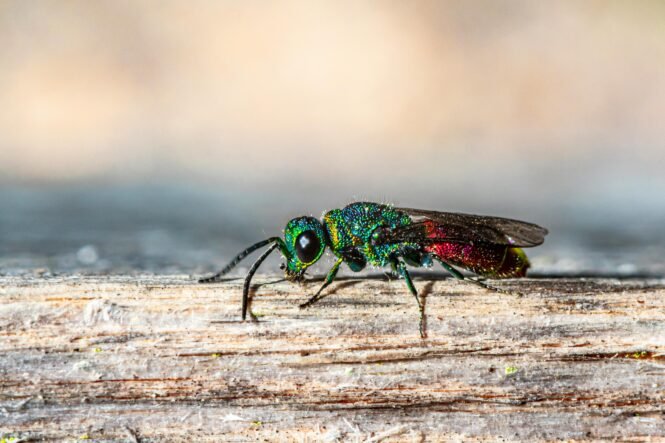
For five years, Frankfurt-based scientists from the natural and social sciences, together with practitioners and citizens, researched how to strengthen appreciation for insects among the urban population and how municipal green spaces can be better utilized for insect conservation. The research project "SLInBio," led by the Institute for Social-Ecological Research (ISOE), also developed and successfully implemented a variety of formats for citizen engagement. At the closing event on May 14, 2025, the project partners presented their research findings and discussed the potential for insect conservation in municipalities with the attendees.
When it comes to insect diversity, many people think of meadows, fields, and forests. But cities also offer valuable habitats for plants and animals. Their diversity is central to ecosystem services. As insect diversity continues to decline, it is crucial to make even better use of urban habitats for insects. This also applies to the city of Frankfurt am Main, with its many parks, green spaces, green belts, gardens, and balconies, where insects could find a variety of suitable habitats and food sources. But how exactly can urban green spaces be used to promote insect diversity? And how can municipalities motivate and encourage citizens to actively contribute to insect conservation?
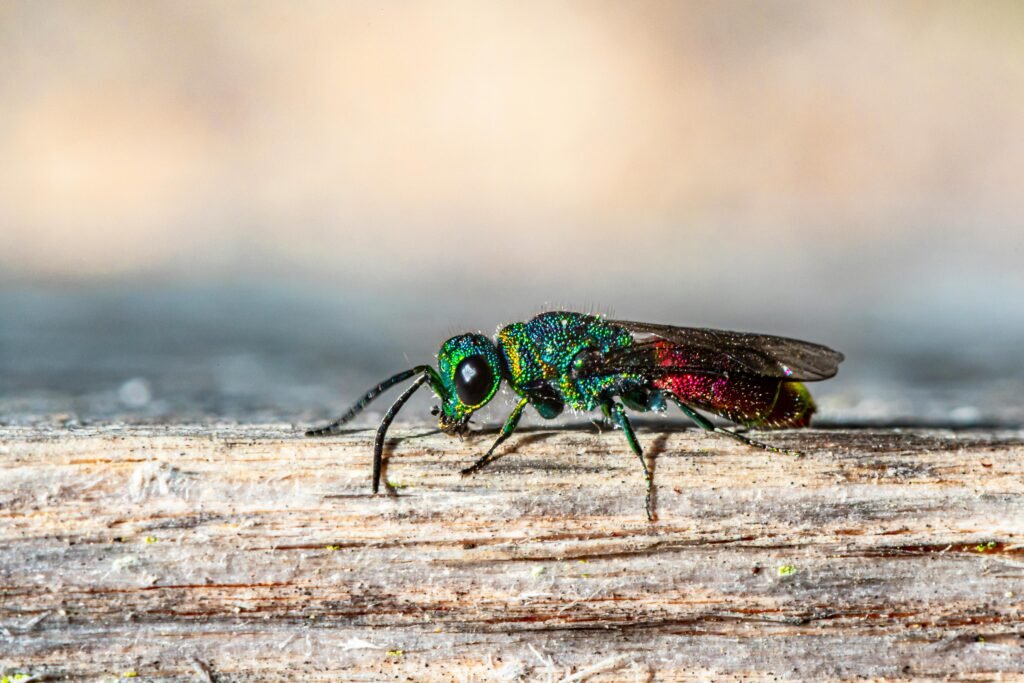
A key factor in this is improving the appreciation of insects. "The contribution that insects make to our ecosystems has long played a rather subordinate role in public perception," says biodiversity researcher Marion Mehring from the Institute for Social-Ecological Research (ISOE). "In recent years, we have seen a general improvement in the understanding of ecological relationships, but a real reversal of the trend in species loss has not yet occurred." A Frankfurt research team led by Mehring therefore wanted to know: How can the appreciation of insects and their biodiversity be promoted in urban habitats?
For this purpose, a unique alliance of science, research and art, civil society, and municipal administration came together in Frankfurt am Main in 2020. Institutions with proven biodiversity expertise included the Institute for Social-Ecological Research (ISOE), the Senckenberg Research Institute and Natural History Museum Frankfurt, Goethe University Frankfurt, and NABU Frankfurt in cooperation with the Palmengarten of the City of Frankfurt, BioFrankfurt, the Parks and Green Spaces Department, the Environmental Office of the City of Frankfurt, and the MainÄppelHaus Lohrberg information and meeting center.
The interdisciplinary and transdisciplinary research team of SLInBio – Urban Lifestyles and the Valorization of Biodiversity – conducted a variety of social and natural science studies in Frankfurt until May 2025 – including surveys, insect monitoring, and toxicological inventories – and pursued diverse participatory approaches for civic engagement. At the research project's final event on May 14, 2025, in Frankfurt's Palmengarten, the research team presented the key findings of the SLInBio project, funded by the Federal Ministry of Education and Research (BMBF).
To preserve biodiversity in cities, the SLInBio research network recommends consistently using all available green spaces as shelters for insects. The project results of the scientific research partners, the Senckenberg Research Institute and Goethe University, clearly demonstrate that every space counts. Using a novel environmental DNA monitoring method, numerous insect species were identified in the urban meadows, gardens, and allotments examined. These included endangered species and some that were detected for the first time in Hesse. At the same time, toxicological tests also detected harmful substances in allotments and home gardens, the origin of which now requires further investigation.
Awareness of the problem of species extinction alone is not enough for civic engagement, explained project leader Marion Mehring of ISOE. "In practice, we observe that knowledge of biodiversity loss does not necessarily lead to appropriate action." The SLInBio research project has clearly shown: "For insect-friendly action, it is crucial that people develop not only detailed knowledge but also a sense of responsibility. We call it valorization when the perception of the value of nature actually leads to biodiversity-friendly action," says Mehring.
To ensure this success in practice, the research project relied heavily on innovative and, above all, interactive formats for urban society. Not only exhibitions, workshops, and citizen science offerings, but also artistic interventions offered Frankfurt residents opportunities to participate. The project team designed formats for reflection, learning, and experience to open up new perspectives on the topic of insect diversity and its importance for a livable city. These included the "Insect Embassy," the art project "Insectopolis," the exhibition "Playful? Roulette with the Insect and Plant World," the "Designing Habitats in the NABU Garden" campaign, and the special exhibition "Urban Insects - Frankfurt's Little Helpers," which, due to its great success, has been extended until further notice and can be visited at the Senckenberg Natural History Museum Frankfurt beyond the SLInBio project term.
About the project
The project “SLInBio – Urban Lifestyles and the Valorisation of Biodiversity: Dragonflies, Grasshoppers, Bumblebees and Co.” was funded from 2020 to 2025 by the Federal Ministry of Education and Research (BMBF) in the funding measure “BiodiWert – Valuing and Securing Biodiversity in Politics, Economy and Society” as part of the BMBF Research Initiative for the Conservation of Biodiversity (FEdA).
Project and cooperation partners
Institute for Social-Ecological Research (ISOE) (Head)
Senckenberg Research Institute and Natural History Museum Frankfurt
Goethe University Frankfurt am Main
NABU Frankfurt am Main eV
Palm Garden of the City of Frankfurt am Main
BioFrankfurt – The Network for Biodiversity
Parks Department of the City of Frankfurt am Main
Environmental Office of the City of Frankfurt am Main
MainÄppelHaus Lohrberg Orchard Center eV
also read
Study on insect mortality: Influence of conventional agriculture greater than assumed | Pugnalom
Innovative AI system can accurately map urban green spaces | Pugnalom


