Natural vegetation, especially in regions heavily influenced by human activities, often lacks many species that might occur there in their original habitat. This so-called "dark diversity" was analyzed globally in a new study led by the University of Tartu (Estonia) and published in "Nature." Scientists from the University of Potsdam contributed to the study, which highlights the importance of preserving and protecting ecosystems outside of nature reserves.
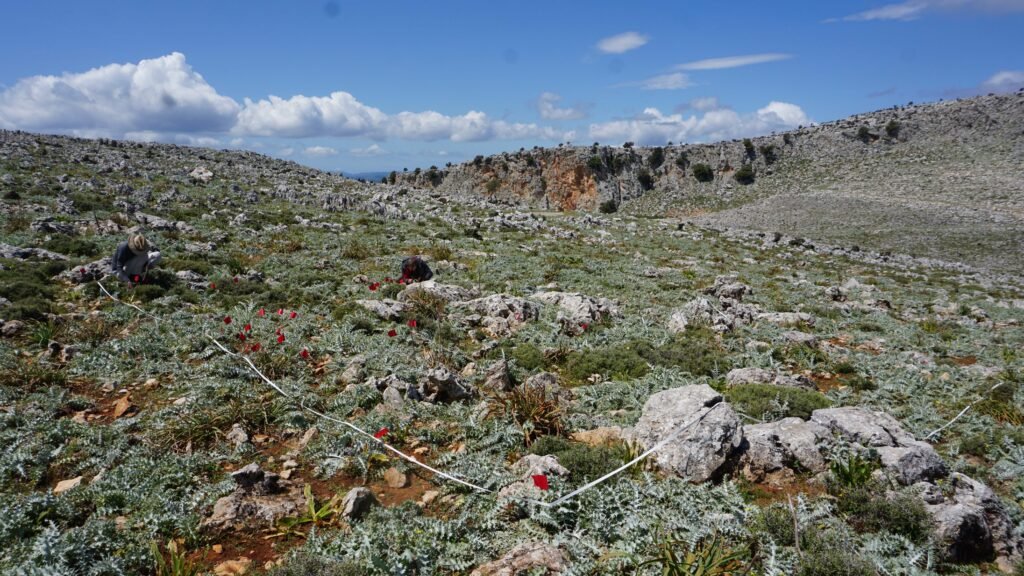
Over 200 scientists from the DarkDivNet research collaboration , including researchers from the Institute of Biochemistry and Biology at the University of Potsdam, studied plants at nearly 5.500 sites in 119 regions worldwide. At each site, the researchers recorded all plant species and identified the dark diversity – native species that could live there but are not present. They were able to capture the full potential of plant diversity at each site and determine how much of this potential diversity was actually present. This made it possible to reveal the hidden impacts of human activities on natural vegetation. “Until now, ecological studies have focused on analyzing species present at a site. Shifting the perspective and asking which species are missing and why allows for a deeper understanding of the processes driving current biodiversity loss,” says Dr. Kolja Bergholz from the Vegetation Ecology and Nature Conservation research group, who is a co-author of the study.
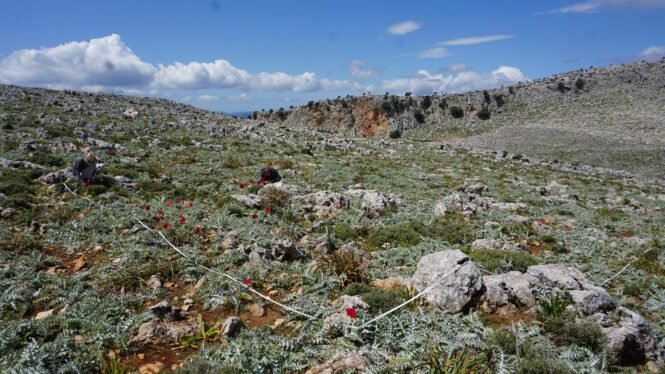
In regions with low population density and little land-use change, ecosystems typically contain more than a third of the potentially suitable species. In contrast, ecosystems in regions heavily influenced by human activities host a maximum of one in five possible species. Conventional measurements of biodiversity could not capture these effects because natural fluctuations in biodiversity in the different ecosystems mask the true extent of human influence. Kolja Bergholz reports: "For the study, we collected data in two very different study regions: the Uckermark region in Brandenburg and the island of Rhodes in Greece. The comparison was very exciting for us because it revealed patterns we would not have expected." The researchers were aware in advance that the Mediterranean flora is far more species-rich than an intensively used landscape in Central Europe. However, it was also shown that the species on Rhodes are very homogeneously distributed throughout the landscape, meaning that the dark diversity is lower than in Brandenburg.
Lead author Prof. Meelis Pärtel summarizes: "Human disturbances have a much greater impact than previously thought, even reaching protected areas. We also found that the negative impact of human activities was less pronounced when at least one-third of the surrounding region remained untouched, supporting the global goal of protecting 30 percent of the Earth's land area."
The DarkDivNet collaboration began in 2018, based on an idea by Pärtel and some colleagues. He recalls: "We had introduced the theory of dark diversity and developed methods to study it, but to make global comparisons, we needed consistent samples across many regions. This seemed impossible, but many colleagues from different continents joined us." The concept of dark diversity is a practical tool for conservationists to identify missing suitable species and track progress in ecosystem restoration.
original publication
Pärtel, M., R. Tamme, CP Carmona, et al. (2025). “Global impoverishment of natural vegetation revealed by dark diversity,” Nature
Background
Extent and speed of species extinction
According to conservative estimates, extinction rates for vertebrates are eight to 53 times higher than the natural extinction rate of two extinction events per 10.000 species per century (E/MSY). For amphibians, rates reach 100 times the natural level. As far as scientific records show , 477 vertebrate species have become extinct since 1900, including 69 mammal species, 80 bird species, and 146 amphibian species. Even in protected areas, a massive decline in species is evident: one study found that the total biomass of flying insects decreased by 75 percent within 27 years.
Ecosystem impacts
If current trends continue at a rate of 3,6 species extinction per year – and no effective countermeasures are currently apparent – 75 percent of all species are threatened with extinction, a situation comparable to paleontological mass extinctions. It is currently estimated that one million species are at immediate risk of extinction.
The extinction of species reduces biomass production by up to 30 percent and nutrient recycling by up to a quarter. At the same time, ecosystem resilience to climate stressors decreases significantly.
Humans are the cause of species extinction. Habitat destruction is responsible for 50 percent of extinctions . Furthermore, globalization, with its international trade and tourism, facilitates the immigration of invasive species; these are responsible for 30 percent of extinctions. At the same time, climate change is accelerating physiological stressors. Overexploitation of certain populations, particularly fish and mammals, further contributes to the problem.