
Gardeners and farmers are familiar with the problem: potting soil and compost containing a portion of waste residue. Regardless of whether the substrates come from hardware stores, discount retailers, or waste disposal companies, shredded binding material, unidentifiable plastic scraps, or Styrofoam can be found in virtually every batch.
Composting organic waste is a central component of the German circular economy. According to the Federal/State Working Group on Waste, around 2019 percent of all domestic organic waste was composted directly in 60. A further 34 percent was subjected to so-called cascade utilization, meaning it was first fermented and then the resulting digestate was composted. The remaining six percent is accounted for by other recycling processes. Organic waste accounts for between 30 and 40 percent of the total waste generated in residential areas.
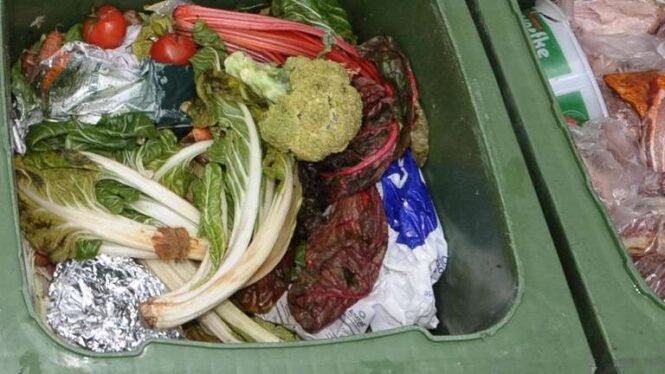
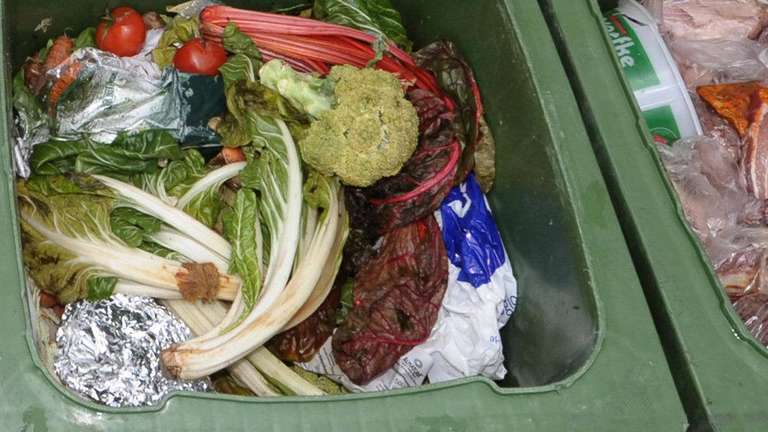
Nevertheless, the composition of the material collected in the green bins is increasingly causing problems for treatment facilities . Many citizens dispose of fruit and vegetable scraps, bouquets of flowers, and other organic waste along with their packaging in the organic waste bin, leading to significant contamination: According to estimates by the German Association of Waste Management, Water and Recycling Industries, the proportion of foreign materials in organic waste is up to five percent – caused by users' incorrect disposal.
Particularly problematic are not only conventional plastics, but also so-called "compostable" plastic bags or "bioplastics." These materials, advertised as biodegradable, do not decompose completely in composting facilities because the decomposition time far exceeds the time the biomass remains in the facility . Furthermore, coffee capsules, packaging films, aluminum, glass, and metal objects, even baby diapers and cigarette butts, are regularly found in organic waste.
Scientific studies confirm the extent of the contamination. For example, a master's thesis by the Hessian State Office for Nature Conservation, Environment and Geology examined composts from various facilities. An average of 56 particles per kilogram of dry matter were found in composts of plant waste, while composts of organic waste from fermentation plants contained an average of 391 particles.
Anyone who carelessly disposes of their green waste according to the motto "out of sight, out of mind" is actively contributing to the endangerment of health and the environment. This is because the foreign materials can release various harmful substances. For example, plastics contain an average of four percent additives such as plasticizers, flame retardants, or stabilizers . Some of these additives, such as lead, organotin compounds, or cadmium compounds, are harmful to health.
Added to this is the growing risk of contamination with microplastics: particles between five millimeters and one micrometer in size that are increasingly accumulating in aquatic and terrestrial ecosystems. They are already an integral part of food chains (including human food chains). Persistent organic substances such as polychlorinated biphenyls (PCBs), polycyclic aromatic hydrocarbons (PAHs), and bisphenol A can accumulate on microplastic particles in concentrations up to a million times higher than in the surrounding environment.
One of the first comprehensive studies on the amount of microplastics humans ingest was published in 2019 in Environmental Science & Technology. This study assumed an annual microplastic intake in the US, based on data from drinking water, food (especially seafood), and the air we breathe. For an adult male, this resulted in an annual intake of approximately 88.000 to 121.000 microplastic particles, with bottled water and the air we breathe being the main sources. Women and children ingest somewhat less, around 74.000 to 94.000 particles per year, due to lower consumption and body weight. This translates to roughly 1.700 to 2.300 particles per week or 7.300 to 10.100 particles per month for adults. The study emphasized that these figures are likely underestimated, as not all sources, such as processed foods, were considered.
Quantifying the mass of microplastics is more difficult because both particle size and density vary. Another study , published in 2021 in the Journal of Hazardous Materials, estimated weekly intake at approximately 0,1 to 5 grams of microplastics per person. This corresponds to roughly 0,4 to 20 grams per month and 5 to 260 grams per year. The wide range results from uncertainties in particle size and density, as well as regional differences in consumption patterns.
Another study from the same year confirmed these estimates, indicating that microplastic intake in Western countries averages between one and ten particles per gram of food consumed. Concentrations of up to 370.000 particles per liter were detected in drinking water from plastic bottles, resulting in significant annual exposure for a daily consumption of two liters. The researchers also pointed out that humans inhale large quantities of microplastics , which can lead to illnesses ranging from asthma to cancer.
There is a great need for further research. Until the early 2020s, the problem of microplastics was, at best, treated restrictively, because there is a lot of money to be made with plastics: The plastics market continues to grow by up to five percent per year; Fortune Business Insights estimates the global plastics market at US$533,59 billion for 2025.
The negligence with which many consumers dispose of their green waste is a sign that the issue of plastics and microplastics continues to be marginalized and receives little public attention. Yet waste disposal companies throughout Germany are complaining about excessive amounts of plastic and foreign matter in organic waste – so much so that the Federal Ministry for the Environment, Nature Conservation, Nuclear Safety and Consumer Protection (BMUV) felt compelled to amend the Organic Waste Ordinance (BioAbfV). Stricter rules have been in effect since May 1, 2025. Organic waste may contain a maximum of 0,5 percent plastic. If excessive foreign matter is found during collection of the green bins, they are left standing, and the owners must re-sort them. Some local bylaws stipulate that such bins are later treated as residual waste and emptied – at the expense of the polluters. The specific rules that apply locally are determined by the respective municipality.
However, as long as relevant laws are not significantly tightened, stricter sanctions are not imposed, and nationwide awareness campaigns do not ensure a change in public awareness, a significant reduction in microplastics via green waste disposal is unlikely.
also read
Germany: Plastic waste exports above all else – Pugnalom
Ocean is a sink for microplastics – Pugnalom
Hamburg's city air significantly polluted with microplastics – Pugnalom


