
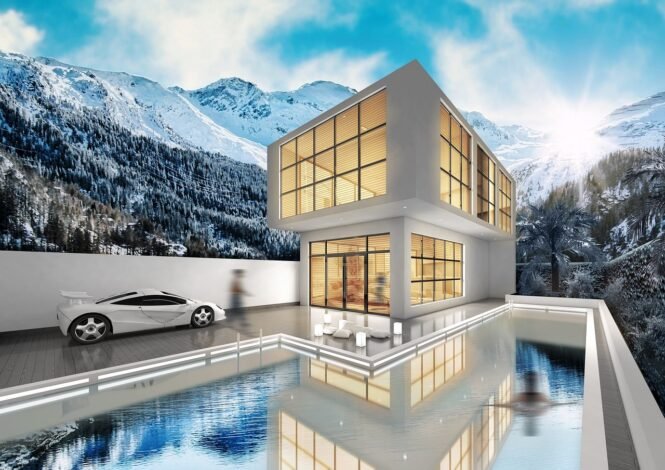
They are celebrated on social media as generous nature lovers: super-rich people who buy large tracts of land, particularly in countries of the Global South, to transform them into private nature reserves. On the other hand, luxury nature tourism strives for unique experiences in dreamlike, remote locations that are initially only accessible to a few but, over time, become accessible to an increasingly larger audience. But are these forms of charity and travel really good for nature and people? What ideas about nature and morally good behavior lie behind them? And how is this phenomenon perceived by the local population and other stakeholders? An interdisciplinary research team led by the Friedrich-Alexander University Erlangen-Nuremberg (FAU) is investigating these questions in the project "Nature's Wealth or Nature for the Wealthy? Philanthropism and Ecotourism in the Global South."
The project, funded by the Volkswagen Foundation with €1,5 million, emerged from research contacts established, among others, through the Bavarian University Center for Latin America (BAYLAT). In this interview, Prof. Dr. Silke Jansen, project manager and new chair of BAYLAT, discusses the project's goals and background.
We are examining the phenomena of conservation philanthropy and luxury tourism as two areas that highlight the effects of wealth. There are a growing number of super-rich people who are acting as philanthropists and, particularly in the global South, are buying up large tracts of land to convert into private nature reserves. At first glance, you might think: That's wonderful if these people use their wealth to do something for nature conservation and biodiversity! But this approach is fraught with a host of problems – not least because it is not a democratically elected government that decides on the establishment of nature reserves, but rather individuals based on their privileged economic situation. At the same time, this approach has a profound impact on the lives of local people, as they may be forced to relocate or abandon their previous way of life, for example, when nomadic groups can no longer move within certain areas. On the other hand, there may also be advantages because jobs are created in the tourism industry. It's important to realize that the phenomenon of conservation philanthropy, as well as certain forms of luxury tourism, is directly linked to a romantic understanding of nature as opposed to human civilization: nature is where there are no people. This view is typical of the Global North, from which most of the super-rich operate, while the biodiversity hotspots, where conservation philanthropy and luxury tourism take place, tend to be located in the Global South. There, a very different understanding of and approach to nature may prevail. Because this phenomenon is so complex, we have assembled an interdisciplinary and international research team.
Who is involved in this project?
We are a team of five PIs from four disciplines and three continents. At FAU, I am leading the project together with geographer Andrés Gerique. Also involved are sociologist Hugo Romero Toledo from the Universidad Autónoma de Chile (Temuco, Chile) and economist Emmanuel Munishi from the College of Business Education in Dar es Salaam (Tanzania). With the Charles Darwin Foundation, we have another partner on the Galapagos Islands in Ecuador.
How exactly do you get the data?
We will primarily conduct interviews and surveys in the three countries of our project partners, in areas where conservation philanthropy and luxury tourism are taking place. To do this, we will talk to the philanthropists, the tourists, and, of course, the local people. We will also compile a corpus of publicly available texts. These texts are plentiful, as many of these projects are not run directly by the philanthropists, but rather by NGOs owned by them. These NGOs have internet and social media presences, organize press conferences, and distribute brochures. We will also visit various tourism fairs to analyze the images of nature constructed by the luxury tourism industry. The ultimate goal is to create an overall picture that demonstrates what defines conservation philanthropy and luxury tourism and how these phenomena play out in different places and at different levels. Our interest lies in both the material realities and the practices of various actors, as well as the discourses that relate to these realities and practices, for example, by justifying or explaining them.
The research project is being funded by the Volkswagen Foundation with 1,5 million euros. Why is this topic so relevant right now?
This call for proposals is part of the funding initiative 'Perspectives on Wealth', which was launched in 2021. Its aim is to examine the phenomenon of wealth as a driver of social transformation. The aim is to encourage a shift in perspective that illuminates these processes from the perspective of wealth: Instead of asking why so many people are poor, how this affects societies, and what can possibly be done about it, the focus is on the extent to which wealth shapes our societies. We are currently observing the phenomenon of super-rich individuals exerting significant influence on global politics without democratic legitimacy, far beyond the realm of conservation philanthropy. For this reason, the topic has recently gained even greater relevance.
also read


