
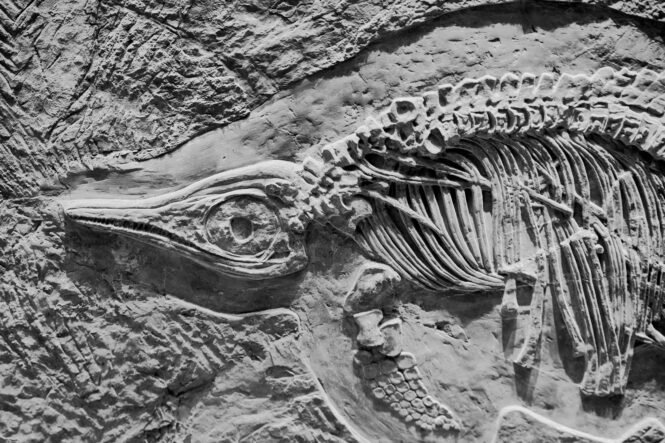
Senckenberg researchers have revealed in a newly published study that a total of 1.409 different taxa – various types of organisms – have been recovered from the 47-million-year-old oil shale deposits at the Messel Pit. The team explains that biodiversity during the Eocene epoch in Messel was higher than in present-day Central Europe, but lower than in modern tropical habitats. The researchers say it will take several more generations before all species are fully documented and the entire biodiversity of the fossil site is recorded. The diversity of plants and insects, in particular, remains insufficiently studied.
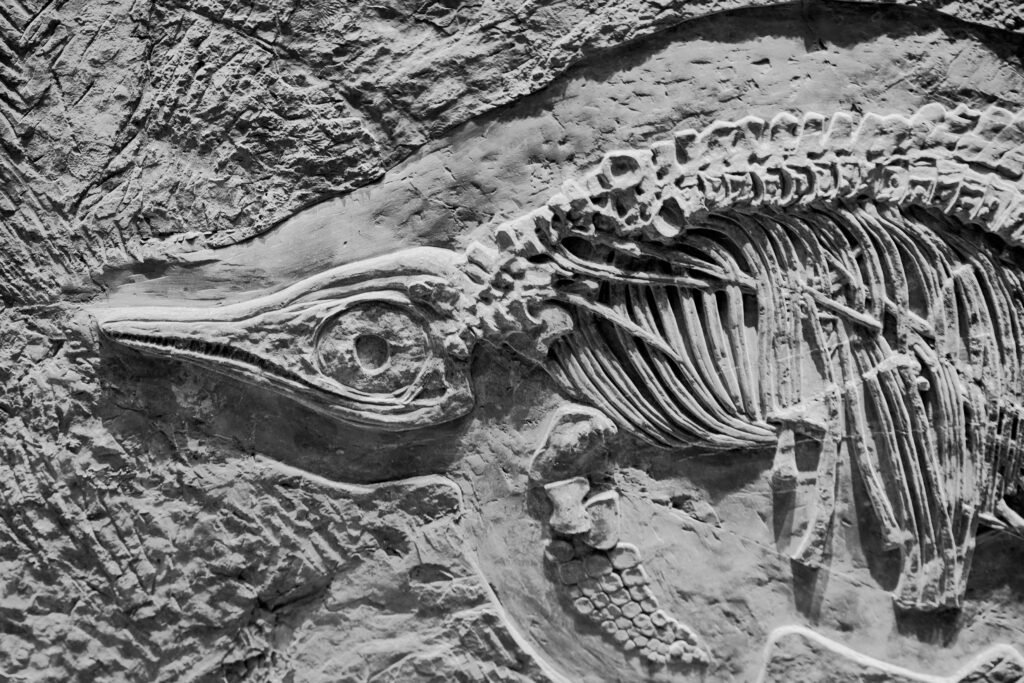
72 bird species, 51 different mammals, and 813 different green plants – a total of 1409 different taxa were recovered from the 47-million-year-old oil shales during the entire excavation period at the UNESCO World Heritage Messel Pit. "The Messel Pit is so special because its sediments are rich in diverse organisms such as microorganisms, plants, fungi, invertebrates, and vertebrates, which otherwise rarely fossilize together. We have compiled an updated list of all documented taxa, both named and undescribed, that were found in Messel," explains PD Dr. Krister Smith from the Senckenberg Research Institute and Natural History Museum in Frankfurt continues: "We were interested in how high the species richness in Messel really was during the Eocene. This allows us to compare it with modern biotopes at the same and other latitudes. Furthermore, the data allows us to estimate how many undiscovered species are still to be found in the rock layers and how long it will take to recover and describe them."
In total, the researchers' analyses include data from over 50 collections. In the early days of fossil collecting in Messel – when the pit was still slated to become a landfill – hundreds of private individuals were employed there at times, digging for fossils. Some of these private collections have since been acquired – at least partially – by public institutions. "To make the dataset as complete as possible, we also included as many private collections as we could in our analysis," Smith adds.
The study shows that species richness around the Eocene Messel Lake was generally higher than in comparable regions of Central Europe today. However, the researchers consider the analogy with a tropical rainforest to be incorrect. "Due to its geographical location alone, Messel cannot be described as tropical. The climate may have been warmer and more balanced than in Central Europe today, but there were still significant seasonal differences in temperature and day length. The very high annual rainfall necessary for a true 'rainforest' could not be detected for Messel either. The biodiversity we recorded is consistent with these observations. In summary, one can therefore say: Overall, species richness in Messel 47 million years ago was higher than in present-day Central Europe – but lower than in well-studied modern neotropical biotopes, such as present-day Costa Rica," Smith explains the results.
Using modern statistical methods, the research team investigated the relationship between species richness and sampling in order to estimate the previously unexploited biodiversity in the Messel oil shales and to predict how long it will take to record it. "If we continue to dig at the average rate we have in recent decades, it will take many generations before the species richness of plants and animals can be recorded anywhere near completely," said the Messel researcher, adding: "For fruit and seed taxa, for example, it is estimated that it will take 130 to 400 years to record almost the entire species richness. For other groups, the number is even higher." The study states that the diversity of plants and insects is currently less well studied than the diversity of vertebrates. Among vertebrates, terrestrial animals in particular are the least known.
"When researching biodiversity, the following also applies to Messel: the better we record a group, the greater the effort required to complete it. The diversity curves are concave downwards – we should therefore not rest on our laurels, but rather increase our efforts. Countless treasures remain hidden in the Hessian UNESCO World Heritage Site, which can also help us better understand environmental developments in a warming world," Smith summarizes.
original publication
Smith KT, Collinson M, Folie A, et al. The biodiversity of the Eocene Messel Pit. Palaeobio Palaeoenv 104, 859–940 (2024). https://doi.org/10.1007/s12549-024-00633-2
also read
Paleontology: "Punk" and "Emo" turn mollusk history on its head | Pugnalom


