
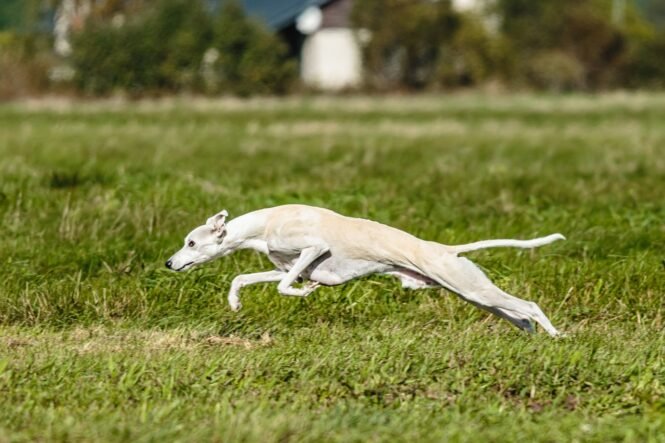
The ongoing global loss of biodiversity makes it increasingly necessary to rapidly collect and analyze genetic information from threatened species. In a collaborative project, the Department of Human Genetics at the Bioscientia Institute for Medical Diagnostics GmbH in Ingelheim am Rhein and the Hessian LOEWE Centre for Translational Biodiversity Genomics (LOEWE-TBG) have recorded and analyzed the complete genome of a greyhound in less than a week – a breakthrough that could have a lasting impact on genome research in species and biodiversity conservation.

The ongoing global loss of biodiversity makes it increasingly necessary to rapidly collect and analyze genetic information from threatened species. In a collaborative project, the Department of Human Genetics at the Bioscientia Institute for Medical Diagnostics GmbH in Ingelheim am Rhein and the Hessian LOEWE Center for Translational Biodiversity Genomics (LOEWE-TBG) have recorded and analyzed the complete genome of a greyhound in less than a week – a breakthrough that could have a lasting impact on genome research in species and biodiversity conservation . The study was published in the journal "GigaByte".
The analysis of the greyhound genome, which the Bioscientia Institute and the LOEWE Center TBG conducted jointly, utilized a new technology: entire genomes are sequenced very precisely and in long sections, so-called "long reads." Using the greyhound, one of the fastest land animals, this was achieved in record time. This is not only a technical achievement, but was also initiated as a symbolic project to address the challenge of species extinction.
"We demonstrate that we can obtain and analyze complete genome information in just a few days—not months," explains Prof. Dr. Hanno Bolz, Head of Human Genetics at Bioscientia. This innovative collaboration between Bioscientia's human geneticists and researchers at the LOEWE Center TBG sets a new standard and provides an effective tool for biodiversity research.
Prompt analytical results are increasingly important for the protection of endangered species, as time is now a crucial factor given the rapid loss of biodiversity. "With projects like these, we can quickly make important genetic information for endangered species available. This not only helps us understand their evolutionary adaptations, but also develop targeted conservation measures," reports Dr. Carola Greve, laboratory director at the LOEWE Center TBG. In addition to the greyhound project, a joint study by the two research partners on the endangered garden dormouse will soon be published. Numerous other joint sequencing projects are already underway.
In the Department of Human Genetics at the Bioscientia Institute, around 100 experts analyze thousands of genomes and the protein-coding regions of genomes, known as exomes, every year to clarify the causes of rare genetic diseases in patients around the world. Bioscientia is the first laboratory ever to use the innovative "long read" genome sequencing used in the greyhound study in human genetic diagnostics. This allows human genetic diseases to be identified more efficiently, which can also significantly improve treatment options.
Scientists at the LOEWE Center TBG, located at the Senckenberg Society for Nature Research in Frankfurt am Main, are sequencing the genomes of many non-human organisms, from bacteria to whales. This information provides valuable insights into – often endangered – plants and animals, as well as insights into their biological relationships, evolution, and adaptations to environmental conditions. Basic and applied research, including conservation management, benefits from this.
original publication
Marcel Nebenführ, David Prochotta, Alexander Ben Hamadou, Axel Janke, Charlotte Gerheim, Christian Betz, Carola Greve, Hanno J. Bolz
“High-speed whole-genome sequencing of a Whippet: Rapid chromosome-level assembly and annotation of an extremely fast dog's genome”
https://doi.org/10.46471/gigabyte.134
also read
BUND Westharz signed controversial gypsum mining agreement until 2014 in 2090 – Pugnalom
AI enables conservation assessments for all species worldwide – Pugnalom



Pingback: Rapid genome analysis of a greyhound sets a new standard for species conservation research - LabNews