
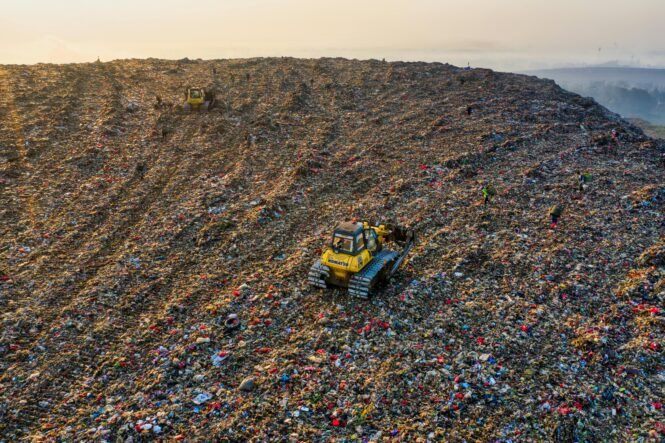
On today's World Health Day, the German Federal Environmental Foundation (DBU) is calling for greater attention to be paid to the health sector. "Rapid consumption of raw materials and resources, tons of waste every day, and enormous greenhouse gas emissions threaten the environment and climate," says DBU Secretary General Alexander Bonde. "We must change this." A start has been made with the DBU's " CirculAid " funding initiative for a more circular economy in healthcare. Interested parties can now submit additional funding applications.

The five CirculAid projects supported by the DBU so far have a funding volume of almost 1,2 million euros. Most end this year, one runs until 2027. More projects are planned. The potential for savings in climate-damaging greenhouse gases (GHGs) such as carbon dioxide, as well as in raw material consumption and waste, is considerable. According to Bonde, this is due, among other things, to linear thinking and business patterns that have been practiced for decades. Bonde: "This simple take-make-waste strategy for consuming, using, and wasting raw materials must become a thing of the past – especially in the healthcare sector. We can best protect the earth and its resources through a comprehensive circular economy." Such a circular economy begins with product design, extends beyond waste prevention "and also includes reusing, reusing, sharing, repairing, and recycling." The DBU Secretary General continued: "Unfortunately, in the healthcare sector, single-use products have often displaced multiple use and the circular economy. This results in the irretrievable loss of valuable raw materials and fuels raw material consumption. We must address this and reverse it."
Studies by the Fraunhofer Institute for Systems and Innovation Research (ISI) and the German Federal Environment Agency (UBA) suggest the vast potential for resource savings within the healthcare sector. According to these studies, the healthcare sector consumes more than 100 million tons of raw materials annually , ranking fourth among sectors nationwide in raw material consumption – after construction, public administration, and processed food. A similar picture emerges regarding greenhouse gas emissions: Fraunhofer ISI reports that direct and indirect greenhouse gas emissions from the healthcare sector account for approximately six percent of Germany's total emissions – the third largest contributor after construction and the food industry. The UBA reports that resource consumption in the healthcare sector increased by around 80 percent between 1995 and 2016 – and this trend is continuing. Closely linked to this is a significant increase in waste volumes. From gowns, laryngoscopes, and tweezers to scissors, bowls, and dishes, not to mention packaging and disposable products of all kinds. According to surveys, hospitals alone are responsible for nearly five million tons of waste annually – making them the fifth-largest waste producer in Germany. And that's not all: Add to that the waste from other healthcare facilities such as nursing and retirement homes, rehabilitation clinics, and doctors' offices.
"We want to break this vicious circle," says Dr. Max Hempel. The responsible DBU department head continues: "To achieve climate-neutral and resource-efficient healthcare, reducing resource consumption must be the top priority. To achieve this, we are looking for model and innovative flagship projects." According to Hempel, the appeal is aimed primarily at bright minds in the chemical-pharmaceutical products, medical technology items and devices, as well as textiles and personal protective equipment sectors. Hempel: "Project approaches include, for example, product and process optimization, but also waste and resource management, as well as qualification measures that focus on resource efficiency." The DBU CirculAid initiative is aimed at clinics, nursing homes, and medical practices, as well as universities and training centers in the medical field. Hempel: "Cooperation between small and medium-sized enterprises and research institutions is expressly desired."
The five CirculAid projects funded by the DBU so far represent the spectrum of possible ideas. One project, for example, aims to develop a process that will recycle at least some of the plastic waste typically generated, turning it into hygienically safe recyclate. Another measure is exploring the circular economy potential of ventilation systems. This does indeed open up several options, as ventilation systems currently consist primarily of disposable components that are disposed of after use. And in addition to the recycling of surgical instruments and the development of hygienic, reusable textiles in the operating room, another project is attracting attention. It shows how resources can be saved even in unexpected places – but this requires abandoning old ways of thinking: The University Hospital and the Luisenhospital in Aachen are currently investigating how a previously unchallenged standard can be replaced: solid instead of liquid soap. “This would have the advantage of reducing transport and storage volumes, and would also eliminate plastic packaging,” says Hempel.
also read
Plastic bags, cups, and other trash found at the deepest point in the Mediterranean | Pugnalom
Added value without waste – ATB researchers design novel biorefinery | Pugnalom


