

The massive gas production in dead whales like Timmy, which can lead to bloating and occasional rupture of the carcasses, is largely driven by methanogenesis . This anaerobic metabolic pathway of methanogenic archaea is one of the final steps in microbial decomposition and is responsible for the majority of the methane (CH4) produced.
What is methanogenesis?
Methanogenesis is the biological production of methane by methanogenic archaea – a group of microorganisms that are among the oldest life forms on Earth. They obtain energy by converting simple substrates such as hydrogen (H2), carbon dioxide (CO2), acetate, formate, or methyl compounds under strictly anaerobic conditions.
The most important reactions are:
- Hydrogenotropic methanogenesis (most common route in the whale carcass):
4 H2 + CO2 = CH4 + 2 H2O
This reaction is produced by archaea such as Methanobacterium, Methanococcus or Methanosarcina catalyzed. - Acetoclastic methanogenesis:
CH3COO- + H+ = CH4 + CO2
Here, acetate is directly split into methane and carbon dioxide. - Methylotropic methanogenesis:
From methanol, methylamine or dimethyl sulfide.
These processes take place in oxygen-free environments, such as those that quickly develop inside a whale's body after its death.
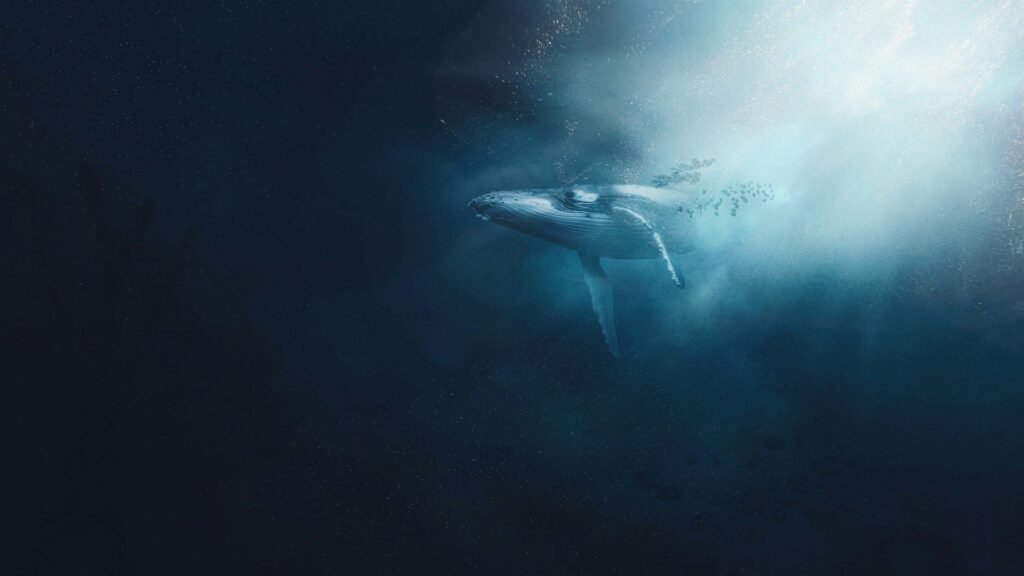
Process inside a whale carcass
After the death of a whale (e.g., the humpback whale "Timmy"), there is a rapid depletion of oxygen in the tissue. Initially, fermentative bacteria (Clostridia, Bacteroides, etc.) dominate, breaking down proteins, fats, and carbohydrates into organic acids, alcohols, hydrogen, and carbon dioxide.
These breakdown products serve as substrates for methanogenic archaea. Particularly in fatty tissues and the intestinal tract, large quantities of hydrogen and acetate are produced, which are converted to methane by the archaea.
The massive layer of blubber in a humpback whale – up to 30% of its body weight – provides an enormous substrate for lipolysis. The fatty acids released from this process are syntrophically oxidized by bacteria to acetate and hydrogen, which are then processed into methanogenic compounds. This explains why large whales bloat so extensively.
Time course
- First hours to days: Dominance of fermentative bacteria, initial gas production (especially CO2 and H2).
- From day 3 to 7Methanogenesis becomes dominant. Methane production increases sharply.
- After 1–3 weeksMaximum gas accumulation. The pressure can reach several bar.
- Depending on temperatureAt 10–20 °C (typical for the North and Baltic Seas), the process is slower than in warmer waters.
factors
- Size of the whaleThe larger the animal, the more biomass it has and the slower the heat loss – resulting in longer and more intensive methanogenesis.
- Water temperatureHeat accelerates all metabolic rates.
- Previous health statusInfections or injuries can increase bacterial colonization even during a person's lifetime.
- Oxygen availabilityIn deeper water layers or in cases of rapid silting, the carcass remains anaerobic for a longer period.
ecological importance
Whale carcasses ("Whale Falls") are important ecosystems on the seabed. Methanogenesis contributes to the development of a unique microbial ecosystem over many years, which feeds numerous specialized species – from bacterial mats and mussels to worms.
However, on land or in shallow coastal waters, gas formation poses a practical challenge. The resulting gases (especially methane and hydrogen sulfide) are not only responsible for the swelling, but can also be toxic.
Conclusion
Methanogenesis is the crucial biochemical process that causes dead whales like "Timmy" to bloat and potentially burst. It is a natural component of anaerobic decomposition and a striking example of the enormous metabolic activity of microorganisms even after an organism's death.
For emergency services and the public, this means: Bloated whale carcasses should always be handled from a safe distance and only by qualified personnel. The biochemical processes are well understood, but cannot be prevented – they are part of the natural cycle of marine life.


