
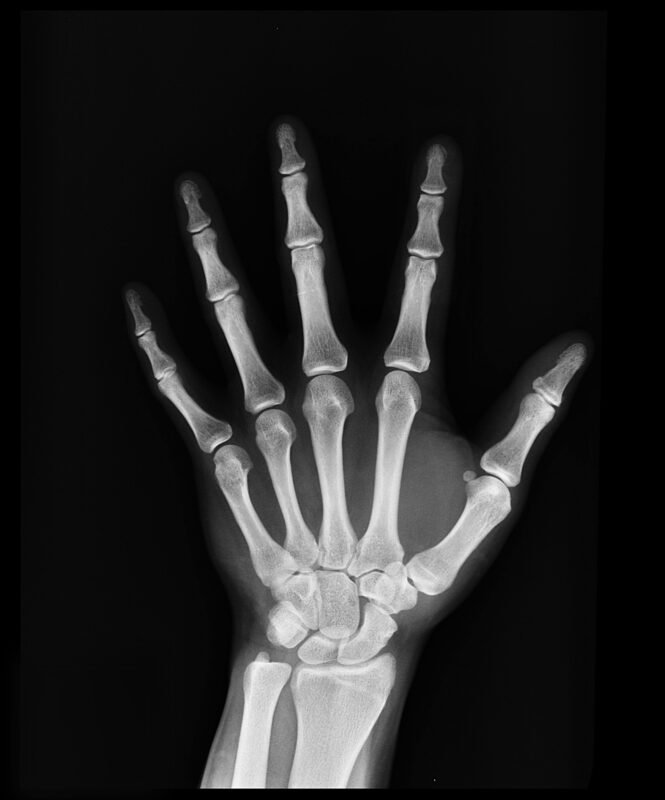
New organic-inorganic hybrid materials based on bismuth are ideally suited as X-ray detectors. They are significantly more sensitive than commercially available X-ray detectors and offer long-term stability. Furthermore, they can be produced without solvents by ball milling, an environmentally friendly synthesis process also used in industry. More sensitive detectors would significantly reduce radiation exposure during X-ray examinations.
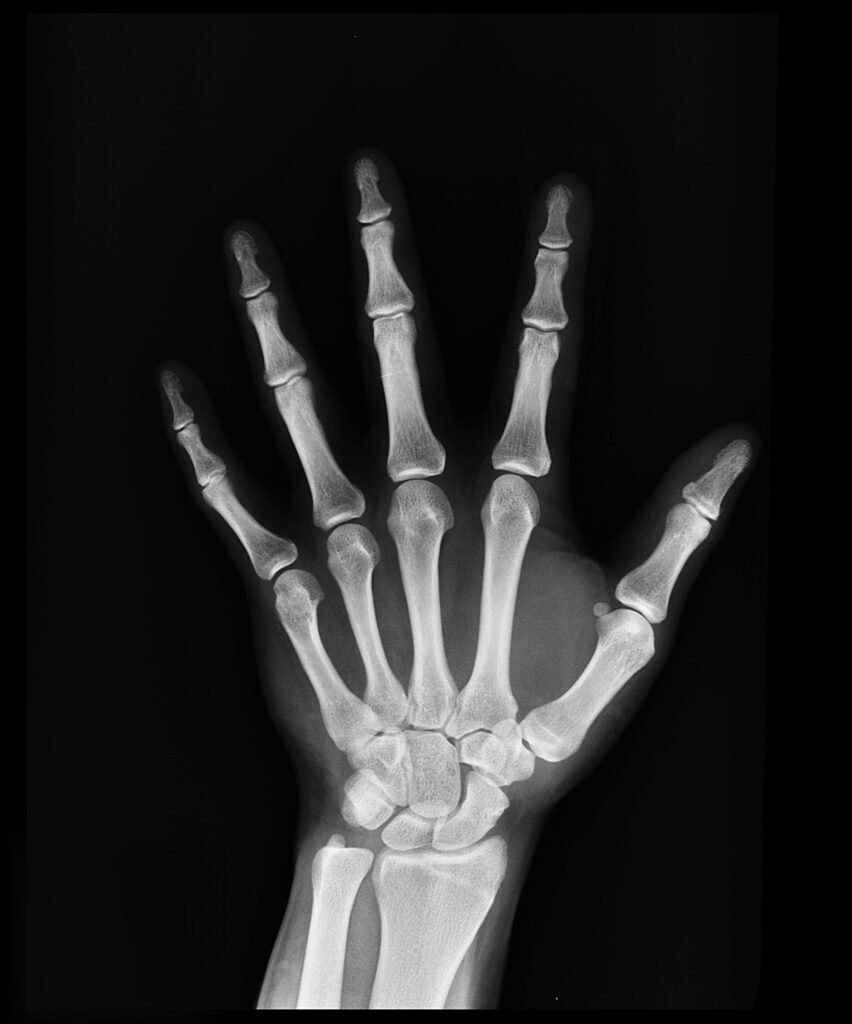
X-ray imaging is indispensable in medical diagnostics and materials research. To create an image, a detector converts the X-rays that have passed through the object into electrical signals. The more sensitive these detectors are, the lower the radiation exposure to the sample can be. This would be particularly beneficial in medical applications.
A team led by X-ray detector expert Prof. Olena Maslyanchuk at HZB has now successfully demonstrated the suitability of two new materials as highly efficient X-ray detectors. These are organic-inorganic hybrid materials inspired by halide perovskites, which are of interest for optoelectronic applications: [(CH3CH2)3S]6Bi8I30 and [(CH3CH2)3S]AgBiI5, both containing the element bismuth. They were first investigated by Dr. Allan Starkholm for his doctoral studies at the Royal Institute of Technology, Stockholm, who is now a postdoctoral researcher at HZB.
"They are ideal for X-ray detection," says Starkholm, citing their high atomic numbers, suitable band gaps, and unique structural properties: "They contain stable sulfonium cations, which promise better longevity in use, instead of the traditionally used hygroscopic ammonium cations."
In collaboration with BAM expert Dr. Franziska Emmerling, a particularly environmentally friendly production process that does not require solvents was then used: ball milling. This produces polycrystalline powders that are pressed into dense pellets. These processes are also established in industry.
The pellets were tested as so-called flat-panel detectors for X-rays in Dr. Felix Lang's group at the University of Potsdam. "The results show that they perform better than current commercially available detectors, even over long periods of time," says Starkholm. "In fact, they exhibit up to two orders of magnitude greater sensitivity than commercially available materials such as amorphous selenium or CdZnTe – and can detect X-ray doses almost 50 times lower," says Starkholm.
In addition to extensive laboratory analyses, the team was also able to examine the samples at the KMC-3 XPP beamline at BESSY II. The detectors showed a stable response to prolonged pulsed X-ray irradiation under high photon flux, with no measurable degradation of performance after irradiation, demonstrating the robustness of the material.
"These results demonstrate how exciting it can be to expand research into hybrid materials at HZB beyond photovoltaics, both within and outside the perovskite field. Our study demonstrates that these completely new bismuth-based materials are excellent candidates for X-ray detection. With more sensitive X-ray detectors, radiation exposure in X-ray imaging could be significantly reduced," says Olena Maslyanchuk.
The next step is technology transfer. "There are so many exciting companies in Adlershof with whom we could collaborate to optimize the development of such X-ray detectors," says Starkholm.
original publication
Advanced Materials (2025): Green Fabrication of Sulfonium-Containing Bismuth Materials for High-Sensitivity X-Ray Detection
Allan Starkholm, Dominik Al-Sabbagh, Sema Sarisozen, Alexander von Reppert, Matthias Rössle, Markus Ostermann, Eva Unger, Franziska Emmerling, Lars Kloo, Per H. Svensson, Felix Lang, and Olena Maslyanchuk
also read
New hybrid materials are more efficient than conventional thermoelectrics | Pugnalom
Researchers achieve breakthrough: A metal that does not expand | Pugnalom


