
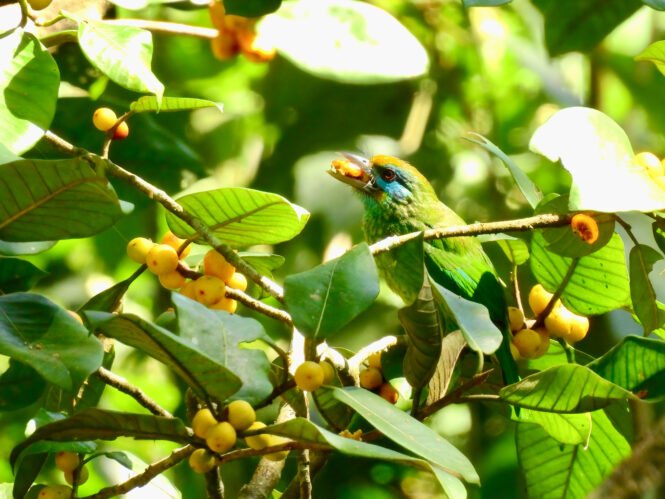
Mammals avoid sour foods, but many birds like to eat sour fruits.
A new study shows that birds' acid receptors are suppressed when they eat highly acidic foods. This inhibits the transmission of acid signals and thus increases tolerance. The study's results suggest that the molecular evolution of acid receptors in birds played a key role in their evolutionary history and diversification. Interestingly, this development paralleled the evolution of sweetness perception in songbirds, suggesting a coevolution of sour and sweet taste senses.
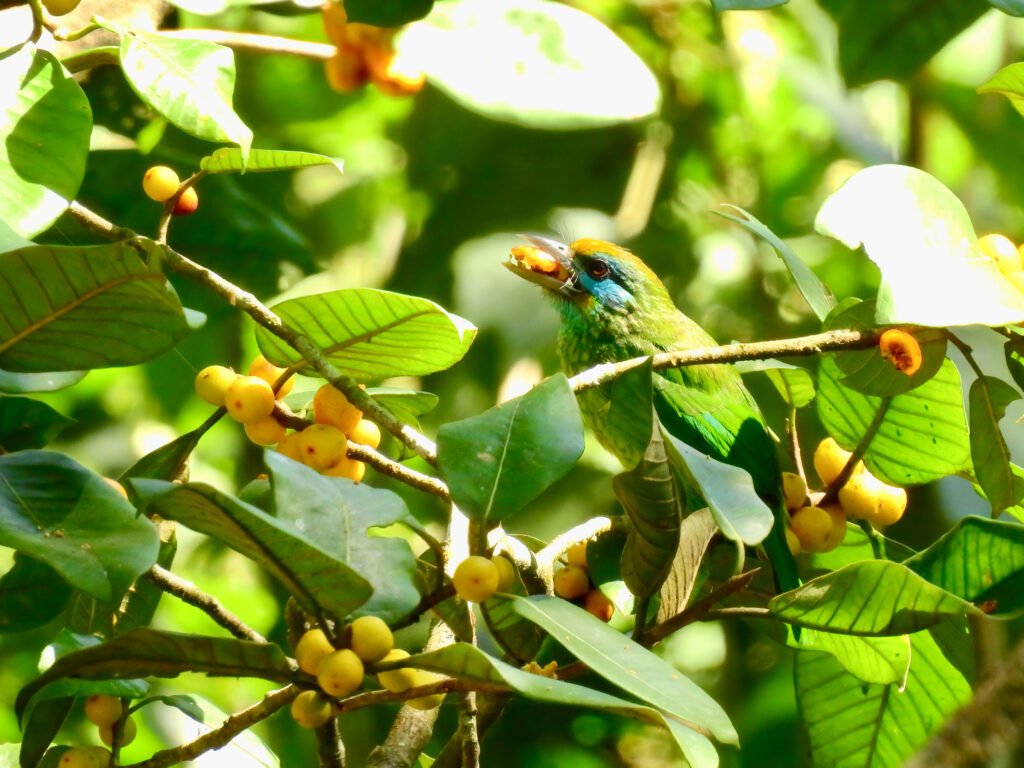
Birds are particularly diverse terrestrial vertebrates. A key factor in their evolutionary history is their flexible adaptability to food and the development of new food sources. Fruits, in particular, are an important source of energy for most bird species, especially during migration or in times of food scarcity.
In a new study, researchers from Maude Baldwin's department at the Max Planck Institute for Biological Intelligence, in collaboration with the Kunming Institute of Zoology of the Chinese Academy of Sciences, have discovered that birds have evolved a strong tolerance to acidic foods through evolutionary change. This ability to eat extremely acidic foods has helped them exploit diverse ecological niches. The study thus provides new insights into the evolution of animal senses and ecological adaptations.
Mammals avoid acidic food sources. Many bird species, however, can easily feed on acidic fruits. The research team identified a key factor for this tolerance: The sour taste receptor, otopetrin 1 (OTOP1), is suppressed in some bird species in highly acidic environments. This reduces the transmission of acid signals. The birds thus perceive acid less and tolerate it better.
Using genome editing, the researchers inserted the OTOP1 gene from a canary into mice. These genetically modified mice showed a significant reduction in neuronal responses to acidic stimuli. In various bird species, it was found that if their OTOP1 receptor is not switched off when eating sour fruit, their acid tolerance is also significantly reduced. This confirms the receptor's key function in acid perception and tolerance. Further analyses identified four specific amino acid sites that contribute to the acid-suppressing properties of the OTOP1 receptor (H239, L306, H314, and G378). Only songbirds have the mutation at the last position, G378, which gives them even greater acid tolerance.
By reconstructing the taste receptors of ancestors at different points in the songbird family tree, the researchers also discovered that the evolution of increased acid tolerance in songbirds paralleled the development of the ability to taste sweetness. This suggests a possible coevolution of sour and sweet taste sensations. This interplay allowed the birds to expand their food preferences to include not only very sour fruits but also sugary resources such as nectar. This may have influenced the evolution of songbirds, a group of birds that accounts for almost half of all living bird species.
In summary, this new study suggests that the functional development of the acid receptor significantly shaped the evolutionary history of birds and thus provides new insights into the molecular mechanisms by which animals adapt their sensory perception to the environment.
original publication
Molecular evolution of sour tolerance in birds
Hao Zhang †, Lei Luo†, Qiaoyi Liang †, Lifeng Tian †, Yong Shao †, Xiuping Zhang, Kaixun Cao, Anna Luo, Chengsan Wang, Peter Muiruri Kamau, Dong-Dong Wu, Maude W. Baldwin, Ren Lai
† These authors contributed equally to the study.
Science, online June 19, 2025
also read
Sophisticated flowers manipulate bumblebees for better pollination | Pugnalom
Spiders can smell with their legs | Pugnalom


