
Tag Archives: Pisces

Climate change is altering plankton: AI is supposed to find out what this means for food chains.
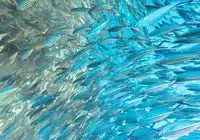
By | October 6th 2026

Ecosystems are changing all over the world. Two groups of plankton form the basis of the marine food web, and they are so closely linked that a change in one can have a significant impact on the other. As the ocean warms, both are changing. "My research asks how they are changing, which species are present and how… Read more »

Research project AkuMonit aims to achieve greater animal welfare and efficiency for aquaculture

By | April 8, 2025

The AkuMonit project at the August-Wilhelm Scheer Institute (AWSi) is developing an intelligent, acoustics-based monitoring system for livestock facilities. By using artificial intelligence, it enables continuous monitoring of animal sounds to improve animal welfare and increase operational reliability. The system detects abnormalities in animal behavior or health at an early stage, allowing farmers to take proactive measures. AkuMonit contributes… Read more »

Remote-controlled underwater videos provide new insights into saddleback bass spawning aggregations in the South Pacific

By | February 26, 2025

An international research team used remotely operated underwater video to study the spawning grounds of saddleback bass (Plectropomus laevis) in the South Pacific. The study, conducted by the French National Institute of Marine Sciences and Technology (IFREMER) and the Leibniz Centre for Tropical Marine Research (ZMT), provides valuable information about the species' spawning areas and courtship behavior, as well as potential conservation measures. The saddleback bass (Plectropomus laevis) is a popular food fish that is heavily fished.… Read more »

Study: River fish need many and messy nurseries

By | February 17, 2025

Researchers from Wageningen University in the Netherlands and the Leibniz Institute of Freshwater Ecology and Inland Fisheries (IGB) investigated which habitats young fish use in the Lower Rhine. To do this, they analyzed a three-year data series of 1,4 million fish larvae and juvenile fish in 18 restored floodplains. More than 60% of the fish species moved between five habitat types during their development, found in the river and floodplain… Read more »

Swarm research: Eye tracking in fish now possible naturally

By | February 11, 2025

In swarm research, a new method allows for the automated analysis of fish eye movements – without invasive procedures and in 3D. Researchers from the Cluster of Excellence "Collective Behavior" and the Max Planck Institute of Animal Behavior in Konstanz explain why this is important for understanding the "rules of the swarm." Fish swarms are fascinating examples of collective animal behavior. Thousands of fish move in… Read more »

Snail cichlids: timed move out of the parental home

By | January 16, 2025

Shell-dwelling cichlids are highly attentive to their offspring, which they raise in abandoned snail shells. A team at the Max Planck Institute for Biological Intelligence used 3D-printed snail shells to discover what happens inside the nest. The young and the mother each follow their own, but synchronized, schedules: As soon as the larvae lose their light sensitivity on the ninth day, they leave the snail shell. With a strict… Read more »

Zebrafish are smart

By | November 6, 2024

Internal representations of the world are essential for intelligent behavior. Without them, it is impossible to mentally rehearse a situation or plan strategically. Humans and other mammals possess specialized neurons, called orientation cells, that create a mental map of the environment. In recent years, orientation cells have also been detected in birds and fish. However, how these neurons interact to produce cognitive… Read more »