Tag Archives: Microbiom

Gut microbiome: Fiber is not the only factor

By | October 6th 2026

Why do the gut microbiomes of people from industrialized and non-industrialized regions differ? A study by the Helmholtz Centre for Infection Research (HZI), together with the European Molecular Biology Laboratory (EMBL), the University of Trento, and the University of Tübingen, shows that diet alone does not explain the differences. In artificially created gut communities, the team examined numerous dietary components and found that plant-based dietary fiber… Read more »
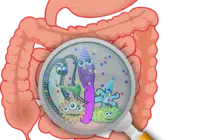

Researchers at Goethe University discover surprising role of formic acid in the gut

By | February 9, 2026

Wissenschaftler der Goethe-Universität Frankfurt haben eine bislang unbekannte Funktion der Ameisensäure im menschlichen Darm beschrieben. Das Molekül dient offenbar als Transportmittel für Elektronen – innerhalb einzelner Bakterien und wahrscheinlich auch zwischen unterschiedlichen Mikroorganismen. Im Zentrum der Untersuchung steht das Darmbakterium Blautia luti, das Ameisensäure im Rahmen seines Stoffwechsels bildet und damit flexibel auf die jeweiligen Nährstoffbedingungen reagieren kann. Neben… Continue reading

Despite treated wastewater, Berlin waters have a disturbed microbiome

By | August 21, 2025

Researchers at the Leibniz Institute of Freshwater Ecology and Inland Fisheries (IGB) have investigated the microbial communities in small bodies of water in Berlin and discovered links between water origin and ecological status. The study shows that rivers such as the Panke and the Erpe are characterized by a high proportion of treated wastewater, which alters their microbiome and impairs water quality and biodiversity. Over the course of a year… Read more »

Cultivating microbial communities is difficult – two researchers find the cause

According to a new study, microbial ecosystems have tipping points where even minor disturbances are enough to cause a collapse. The authors from the Helmholtz Institute for Functional Marine Biodiversity at the University of Oldenburg describe microbial communities as a network in which different populations exchange metabolic products. This web of interdependencies can collapse abruptly if individual populations are lost, the study concludes.… Read more »

Seafood: Genetically modified microbe can reduce mercury intake

A genetically modified bacterium is capable of detoxifying the intestines of mice by breaking down methylmercury. This is demonstrated by a recent study from the University of California, Los Angeles (UCLA) and the University of California, San Diego (UCSD). The scientists inserted DNA encoding methylmercury detoxification enzymes into the genome of a common human intestinal bacterium. The tuna-containing... Continue reading

Alarming: Glacial melt increases heavy metal content of brown algae

By | March 10, 2025

In Arctic fjords, glacial melt caused by climate change is increasing heavy metal levels and altering the microbiome of habitat-forming brown algae, scientists from the University of Bremen have found. Since algae form the basis of the food web, this can have dramatic, cascading consequences for ecology and the economy. In an interdisciplinary collaborative project involving the EU projects FACE-IT, ECOTIP, and SEA-Quester, the scientists investigated the consequences of… Read more »

Microbiome at the root: Bacteria successfully suppress the plant's immune system

By | February 26, 2025

Researchers at the Max Planck Institute for Plant Breeding Research in Cologne have shown that many bacteria living on healthy plant roots can suppress the plants' immune responses. This immunosuppression protects bacterial communities on roots, the so-called root microbiota, from the influence of the plant's immune system. The plant immune system is a highly specialized and sensitive defense system designed to ward off pathogenic microbes. Therefore… Read more »