
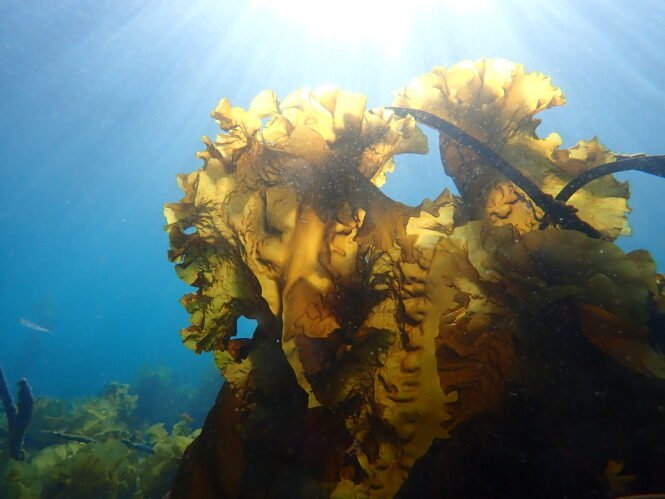
In Arctic fjords, climate change-induced glacier melt increases heavy metal levels and alters the microbiome of habitat-forming brown algae, scientists at the University of Bremen found. Since algae form the basis of the food web, this can have dramatic cascading consequences for the ecology and economy.
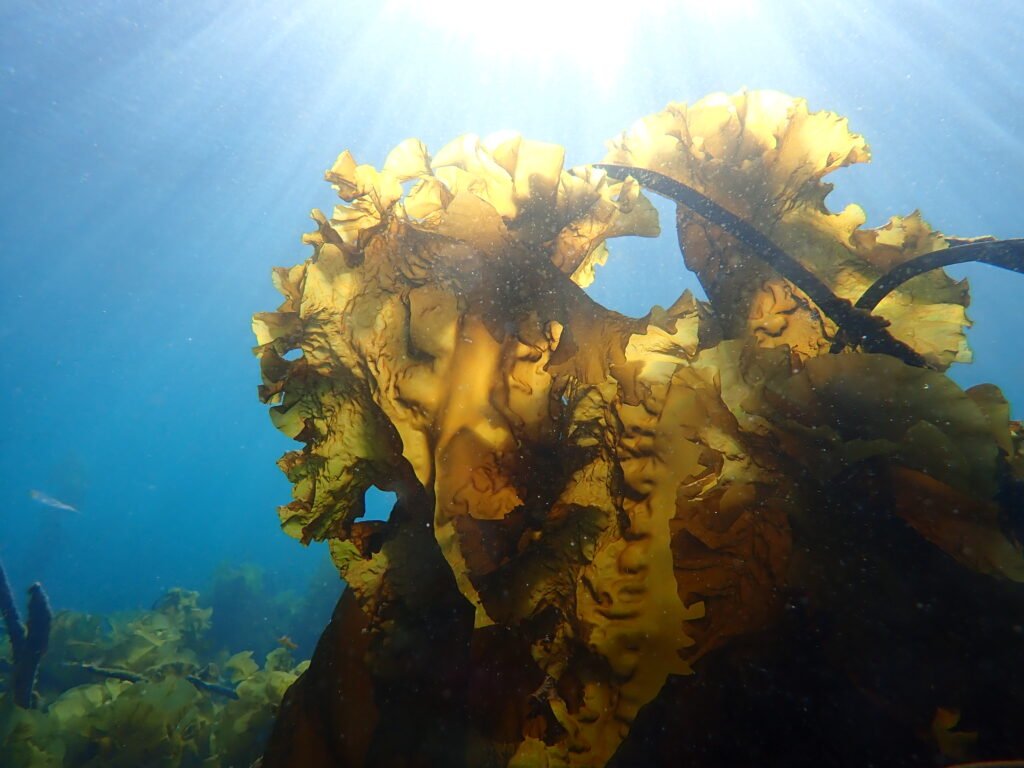
In an interdisciplinary collaborative project between the EU projects FACE-IT, ECOTIP, and SEA-Quester, scientists investigated the consequences of climate change in the Arctic. Their study focused on a group of organisms that form the basis of Arctic coastal ecosystems – brown macroalgae known as kelp , which create dense and extensive underwater forests along rocky coastlines. The ecological role of kelp can be compared to that of trees on land: they provide food, habitat, and nursery grounds for a multitude of organisms, thus maintaining complex ecosystems.
Warming in the Arctic is far above the global average. As a result, snow, glaciers, and permafrost are melting. This is increasing the influence of meltwater in the fjords, and many water parameters are changing drastically: the large amount of freshwater reduces salinity, suspended matter reduces light availability, and the elemental composition changes depending on the sediment and organic material in the meltwater. While many of the elements washed into the fjords can act as micronutrients for kelp, such as sodium, magnesium, and potassium, harmful elements such as heavy metals, such as cadmium, lead, and mercury, have also been found in higher concentrations. The researchers collected kelp affected by different meltwater intensities and analyzed their elemental composition. The team found the same pattern for all elements examined: As meltwater intensity increases, so do elemental concentrations. In the case of mercury, kelps heavily influenced by meltwater had 72 percent higher mercury levels than kelps from the control area.
In addition, the team analyzed how different meltwater exposures affect the kelp microbiome. The microbiome is important for the ecological function of kelp, such as its nutritional value or the cycling of nutrients in the ecosystem. They found that the microbiome is also influenced by meltwater.
Both climate change-induced changes in kelp are likely to have cascading effects on the entire ecosystem. It has already been shown that the ingestion of metal-contaminated kelp has negative effects on predators, such as reduced development, growth, or reproduction. Furthermore, the authors conclude that bioaccumulation of harmful elements may occur throughout the Arctic food web. This could ultimately have socioeconomic consequences. The high biosorption potential of kelp must be considered when implementing kelp mariculture in the Arctic. However, harvesting kelp in fjords with high meltwater inflow and metal pollution could represent an environmentally friendly method for the extraction of rare earth elements, known as phytomining.
original publication
Niedzwiedz S, Schmidt C, Yang, Y, Burgunter-Delamare B, Andersen S, Hildebrandt L, Pröfrock D, Thomas H, Zhang R, Damsgård B, Bischof K (2024): Run-off impacts on Arctic kelp holobionts have strong implications on ecosystem functioning and bioeconomy. Scientific Reports. 14:30506. Doi: 10.1038/s41598-024-82287-w
also read
Glacier melt puts ecosystems in acute danger | Pugnalom
Biodiversity: International meta-study shows devastating effects of pesticides | Pugnalom


