
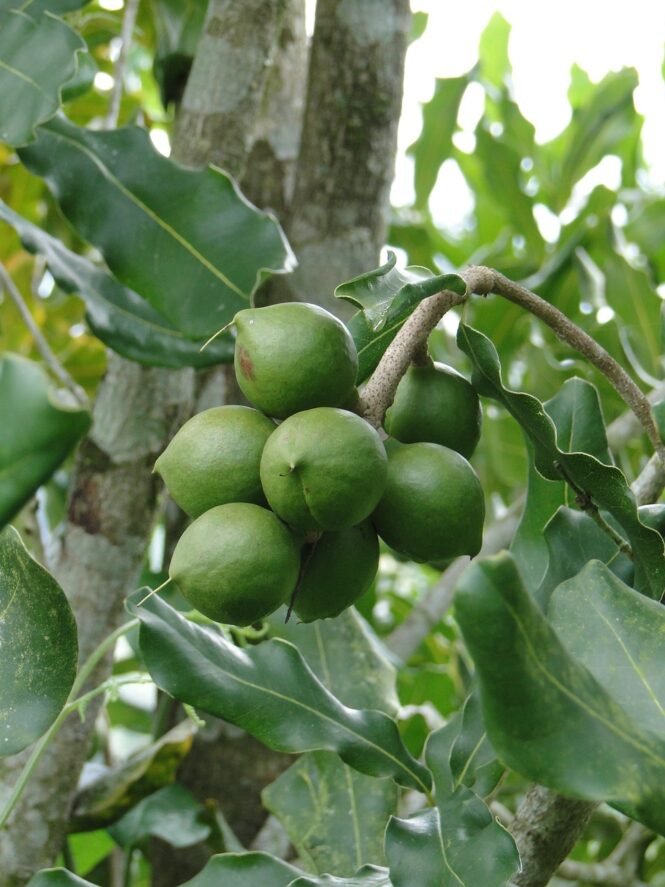
The interaction between wild bees, bats, and birds increases both the quantity and quality of macadamia nuts. Furthermore, the effectiveness of these animal ecosystem services depends on the altitude of the area and the presence of natural habitats. This is the finding of an international study involving the Universities of Göttingen and Hohenheim, as well as the University of the Free State and the University of Venda in South Africa.

“We used both observations and experiments to determine how pollination and pest control – individually and together – influence plant production,” explains lead author Mina Anders from the Functional Agrobiodiversity and Agroecology research group at the University of Göttingen. Insect pollination increased the number of nuts fourfold compared to plants without pollinators, significantly boosting yields. At the same time, bats and birds that feed on pest insects reduced insect infestation by an average of 40 percent, improving the overall quality of the nuts. Prof. Dr. Ingo Grass, head of the Department of Ecology of Tropical Agricultural Systems at the University of Hohenheim, emphasized the importance of the landscape setting for improving these ecosystem services: “Macadamia tree rows oriented perpendicular to natural habitats showed the greatest pollination effects. Simultaneously, biological pest control decreased at higher elevations but was enhanced by nearby natural habitats,” he noted.
The research results show that pollination and biological pest control are important and complementary ecosystem services that can be optimized through intelligent plantation design and the protection of natural habitats. Prof. Dr. Catrin Westphal, Professor of Functional Agrobiodiversity and Agroecology at the University of Göttingen, underscores the study's far-reaching implications for sustainable agriculture: "By managing these ecosystem services together, we can move toward more sustainable agriculture. This promotes agricultural productivity while simultaneously reducing the need for chemicals that threaten biodiversity."
original publication
Mina Anders et al. Complementary effects of pollination and biocontrol services enable ecological intensification in macadamia orchards. Ecological Applications 2024. DOI: https://doi.org/10.1002/eap.3049


