
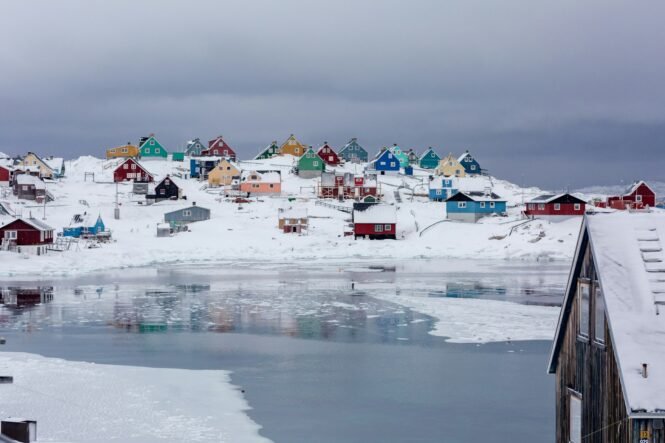
The hypothetical U.S. annexation of Greenland under President Donald Trump would represent a clear violation of international law, specifically the UN Charter’s prohibition on the use of force to acquire territory. Such an act echoes historical aggressions like Russia’s invasion of Ukraine or Iraq’s annexation of Kuwait, prompting global responses through economic and scientific isolation. In response, nations, organizations, and civil society could implement targeted boycotts to impose costs on the U.S., aiming to deter or reverse the move. Below is a comprehensive list of substantial, fact-based scientific and economic boycott measures, drawing from precedents like the anti-apartheid campaigns against South Africa, sanctions on Russia post-2014 Crimea annexation, and academic boycotts against nations engaging in territorial overreach. These measures focus on non-violent pressure, emphasizing multilateral coordination for maximum impact. Each is detailed with rationale, implementation strategies, historical parallels, and potential economic or scientific effects on the U.S., ensuring a balanced, evidence-driven approach.

1. Global Boycott of U.S. Agricultural Exports
One of the most direct economic boycotts could target U.S. agricultural products, which form a significant portion of American exports, valued at over $150 billion annually. Countries in Europe, Asia, and Latin America could impose tariffs or outright bans on U.S. grains, soybeans, corn, and meat products, citing the Greenland annexation as a breach of territorial integrity norms.
Historically, consumer boycotts of agricultural goods have proven effective in pressuring regimes. For instance, the international boycott of South African fruits and wines during the apartheid era, starting in the 1960s, contributed to economic isolation that helped end the system by the 1990s. Organized by groups like the Anti-Apartheid Movement, it involved supermarkets refusing to stock South African produce, leading to a drop in exports. Similarly, post-2022 Russian aggression in Ukraine, the EU and allies boycotted Russian agricultural exports, reducing Russia’s grain market share and causing domestic shortages.
Implementation could involve the European Union leading with a coordinated tariff regime under its Common Agricultural Policy, potentially raising duties on U.S. imports by 50-100%. Civil society campaigns, akin to the BDS movement against Israel, could encourage consumers worldwide to avoid U.S.-branded foods like Coca-Cola or McDonald’s products linked to American farms. Environmental groups might amplify this by highlighting U.S. agricultural subsidies that distort global markets, tying it to broader sustainability concerns.
The economic impact on the U.S. would be substantial: agriculture employs millions and supports rural economies in swing states. A boycott could lead to a 20-30% drop in export revenues, based on models from Russia’s experience where grain exports fell by billions. This pressure might force U.S. policymakers to reconsider, as farm lobbies have historically influenced foreign policy. Scientifically, this could extend to boycotting U.S.-funded agricultural research collaborations, such as those through USAID, isolating American agronomists from global conferences on climate-resilient crops.
2. Divestment from U.S. Fossil Fuels and Energy Sector
A targeted divestment campaign against U.S. oil, gas, and coal companies could cripple America’s energy dominance, especially given its role as the world’s top oil producer. International investors, pension funds, and governments could pull funds from firms like ExxonMobil or Chevron, mirroring the fossil fuel divestment movement but framed around geopolitical aggression.
Precedents include the global divestment from Russian energy post-Ukraine invasion, where the EU phased out Russian oil imports, costing Russia tens of billions. Similarly, Norway’s sovereign wealth fund divested from companies tied to Israeli settlements in occupied territories, demonstrating how ethical investing can align with international law principles. The anti-apartheid divestment saw universities and funds withdraw billions from South African-linked energy firms, accelerating regime change.
To implement, the EU could accelerate its REPowerEU plan to exclude U.S. liquefied natural gas (LNG), while countries like Japan and South Korea, major U.S. LNG importers, impose quotas. Civil campaigns could pressure institutions like the World Bank to halt financing for U.S. energy projects. Scientific boycotts could complement this by refusing collaborations with U.S. energy research institutions, such as the Department of Energy’s national labs, on carbon capture technologies.
Economically, this could reduce U.S. energy exports by $100 billion annually, hitting states like Texas and Pennsylvania hard. Historical data from Iran’s sanctions shows how energy isolation leads to domestic inflation and job losses. The measure would signal that territorial grabs come at the cost of energy market access, potentially stopping Trump’s plans by eroding support from energy-dependent U.S. industries.
3. Academic Boycott of U.S. Universities and Research Institutions
Scientifically, a boycott of U.S. higher education could isolate American academia, denying collaborations, funding, and knowledge exchange. This would involve foreign universities refusing joint research, conferences, or student exchanges with U.S. institutions, particularly those funded by federal grants.
Historical examples abound: The academic boycott of South Africa in the 1980s barred South African scholars from international journals and events, contributing to intellectual isolation that pressured the apartheid government. More recently, post-2022, many European universities severed ties with Russian institutions over Ukraine, halting joint projects in fields like physics and biology. The BDS-inspired boycotts against Israeli universities have seen associations like the American Anthropological Association limit collaborations, citing human rights violations.
Implementation might start with the European University Association coordinating a moratorium on U.S. partnerships, excluding individual scholars who oppose the annexation to avoid blanket discrimination. Professional bodies in medicine, engineering, and climate science could bar U.S. papers from journals or conferences. For Greenland-specific relevance, boycotts could focus on Arctic research, where U.S. institutions like the National Science Foundation lead, forcing rerouting of collaborations to European or Canadian entities.
The impact would be profound: U.S. universities rely on international talent and funding; a boycott could reduce foreign student inflows (worth $40 billion yearly) and stall breakthroughs in AI, biotech, and quantum computing. Based on Russia’s experience, where scientific output dropped post-boycott, this could hinder U.S. innovation, pressuring Trump via elite academic backlash.
4. Boycott of U.S. Technology and Digital Services
Economically, targeting U.S. tech giants like Apple, Google, and Microsoft could disrupt global supply chains. Countries could impose data localization laws or bans on U.S. software, citing national security risks amplified by U.S. aggression.
Parallels include the EU’s sanctions on Russian tech post-Crimea, banning exports of high-tech goods, which weakened Russia’s semiconductor industry. China’s boycotts of U.S. tech during trade wars led to alternatives like Huawei’s growth. The Arab League’s boycott of Israel in the 1970s included tech restrictions, forcing companies to choose markets.
To enact, the EU could expand its Digital Markets Act to penalize U.S. firms, while BRICS nations develop alternatives. Consumer campaigns could urge avoidance of U.S. apps, similar to the Nestlé boycott over unethical practices.
Effects: U.S. tech exports exceed $500 billion; a 10-20% drop could cause stock plunges and layoffs in Silicon Valley. Scientifically, boycotting U.S.-led tech research, like NASA collaborations, would isolate American space and AI programs, drawing from post-2014 NASA-Roscosmos tensions.
5. Financial Sanctions and Boycott of U.S. Bonds and Banking
A coordinated freeze on U.S. financial assets could target the dollar’s dominance. Central banks might diversify reserves away from U.S. Treasuries, while banning U.S. banks from certain transactions.
Historical models: Post-Ukraine, allies froze $300 billion in Russian assets, crippling its economy. Iran’s sanctions isolated its banks from SWIFT, reducing trade. Anti-apartheid financial boycotts saw banks like Barclays pull out of South Africa.
Implementation: The EU and allies could impose secondary sanctions on entities dealing with U.S. banks tied to military funding. Pension funds divest from U.S. bonds.
Impact: The U.S. holds $35 trillion in debt; mass selling could raise borrowing costs, sparking recession. This high-stakes measure could halt aggression by threatening financial stability.
6. Cultural and Scientific Boycott of U.S. Entertainment and Media
Extending to science, boycotting U.S. films, music, and media could erode soft power. Festivals ban Hollywood, universities reject U.S. cultural exchanges.
Precedents: BDS cultural boycotts against Israel saw artists like Roger Waters refuse performances. Anti-apartheid boycotts isolated South African arts.
Scientifically, this ties to boycotting U.S. media research collaborations.
Effects: Hollywood earns $40 billion overseas; losses could pressure elites.
7. Boycott of U.S. Military and Defense Exports
Nations halt purchases of U.S. weapons, shifting to European alternatives.
Historical: Post-Iraq invasion, some boycotted U.S. arms. Russia’s sanctions hit its defense industry.
Impact: U.S. arms exports top $200 billion; reductions weaken alliances.
8. Targeted Boycott of U.S. Pharmaceutical and Biotech Industries
Refuse U.S. drugs and research ties, accelerating generics.
Precedents: Boycotts of Nestlé infant formula over ethics.
Effects: U.S. pharma exports $50 billion; isolation stalls innovation.
9. Environmental Boycott Linked to Arctic Exploitation
Boycott U.S. firms exploiting Arctic resources post-annexation.
Parallels: Divestment from fossil fuels.
Impact: Hits mining interests.
10. Multilateral Trade Boycott via WTO Challenges
File complaints against U.S. tariffs, imposing retaliatory duties.
Historical: U.S.-China trade wars.
Effects: Broad economic pain.
These measures, if coordinated, could impose trillions in costs, drawing from successful precedents to deter U.S. actions while upholding international norms.