
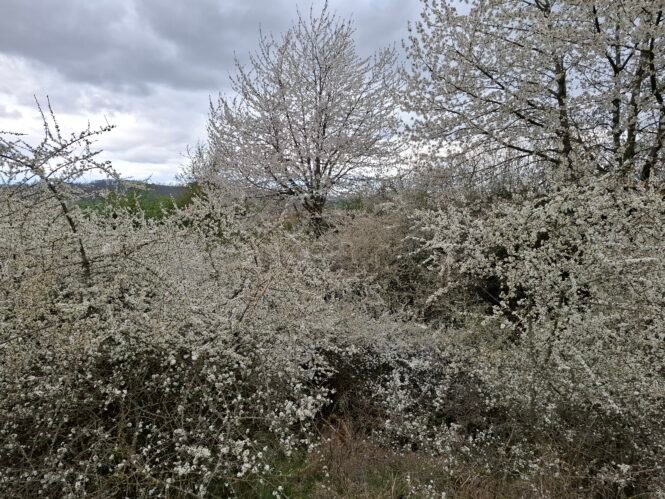
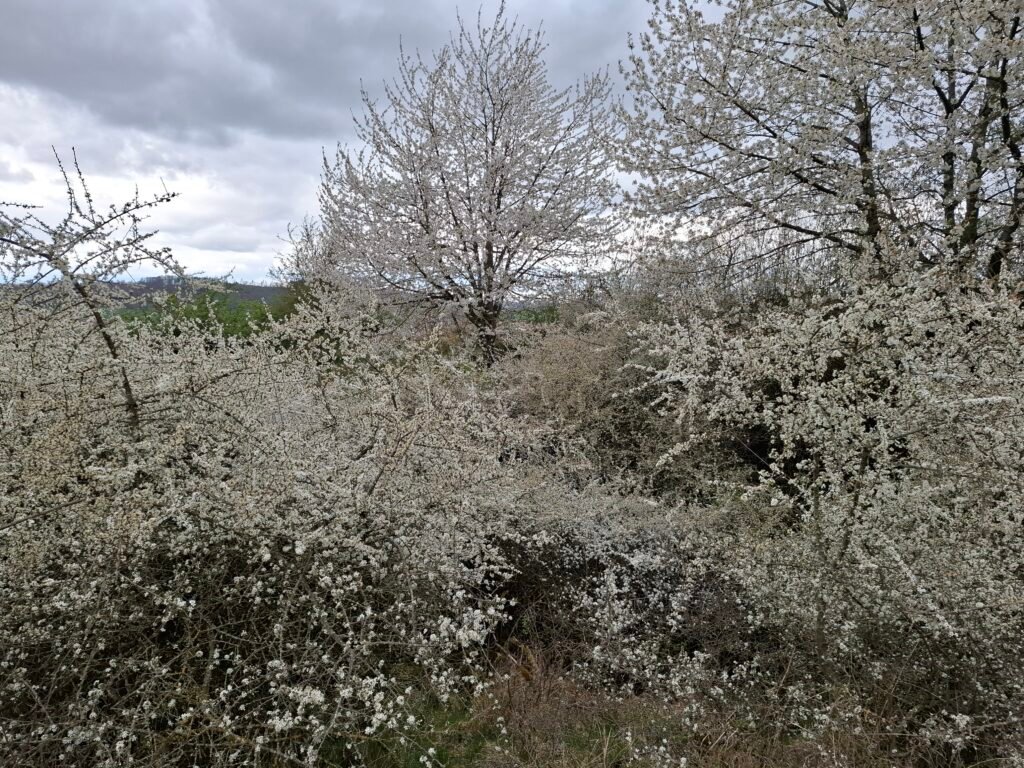
A farmer in northeastern Germany had allowed a difficult-to-access plot of land to become overgrown. The forestry office considered this unauthorized afforestation and demanded the removal of all trees located four meters or less from the boundary of neighboring plots. They set a deadline of eight weeks for this. If the farmer failed to comply, the forestry office threatened him with a fine, as recently reported by agrarheute . The case went to court. The Schwerin Administrative Court ruled in favor of the farmer (2nd Chamber, case number 2 A 146/14).
COMMENT
In times of climate change and ecological crises, one would expect administrations to highly value and recognize the public's own initiatives and commitment. In this case, a farmer also did what many advocates of the so-called process-oriented nature conservation strategy urge: that humans should at least partially stay out of natural processes and allow nature to take its course. This "renaturation through non-intervention" is a sensible addition to the often quite expensive and lengthy large-scale projects, especially from the perspective of tight public finances; the process, referred to in specialist literature and practice as "rewilding," has now become an integral part of the nature conservation strategy. The effectiveness of succession and the corresponding development of biodiversity can be seen, for example, in the Harz Mountains: Here, the former spruce monoculture, massively damaged by bark beetles, is slowly but surely beginning to transform into a polymorphic mixed forest.
Forest dieback in Germany is an acute problem exacerbated by climate change. According to a study by Schuldt et al. (2020), the increase in drought and heat waves leads to a greater susceptibility of forests to pests such as the bark beetle ( Ips typographus ). Between 2018 and 2020, the bark beetle caused damage to approximately 300.000 hectares of spruce forests in Germany, representing about four percent of the total forest area (BMEL, 2021). Climate change is increasing temperatures and reducing precipitation, which weakens the stress resilience of trees, especially spruce (Allen et al., 2015). Monocultures that have been promoted in forestry practices in the past are particularly vulnerable due to their low genetic diversity (Seidl et al., 2016).
The consequences are dramatic: The 2020 Forest Condition Report of the Federal Ministry of Food and Agriculture (BMEL) estimates crown damage at 80 percent of the trees examined—a strong indicator of a progressive loss of vitality. For example, according to an analysis by the Thünen Institute, the Harz region lost around 28 percent of its spruce stands, equivalent to approximately 22.400 hectares; in the Harz National Park, 90 percent of the spruce trees have died.
The loss of forest area, in turn, exacerbates CO₂ storage capacity, as forests absorb approximately 14 percent of Germany's greenhouse gas emissions (UBA, 2022). And that's not all. The more forest area Europe loses, the more drastic the climatic impacts. Cleared areas offer less protection from solar radiation, which can increase soil temperatures and reduce soil moisture – and this, in turn, intensifies the problem of drought. Furthermore, forests compensate for warming through evaporative cooling, promote cloud formation, and reduce solar radiation. Where forests are absent, there is a large-scale lack of transpiration surface, and temperatures can rise locally by an additional one to two degrees. At the same time, precipitation decreases by an estimated five to ten percent, particularly in the summer months. The more forest is lost, the drier and warmer the microclimate becomes – and this, in turn, increases susceptibility to pests and fires. A dramatic, self-reinforcing cycle.
One might argue that the area in this case is negligible because it is tiny, and that the comparison to Europe's forests is far-fetched. But we at pugnalom believe that even small things make a difference. Where authorities and private individuals are cutting down or felling trees en masse in their gardens, and shrubs and hedgerows are being pruned or cleared beyond recognition, the commitment of the aforementioned farmer deserves recognition. His action has certainly promoted biodiversity, as overgrown areas often serve as refuges for native species. Furthermore, the initiative to sell trees for hedgerows demonstrates an awareness of ecological land use, since hedgerows sequester CO₂, prevent soil erosion, and create habitats for insects and birds (Baudry et al., 2000).
Private initiatives for reforestation or rewilding are scientifically valuable because they can partially compensate for the area lost due to forest dieback. A meta-analysis by Crouzeilles et al. (2017) shows that natural regeneration in degraded areas is often more cost-effective than active reforestation and offers comparable ecological benefits. The farmer argued that rewilding does not require permits, which is plausible from an ecological perspective, as spontaneous succession promotes adaptation to local conditions (Chazdon, 2014).
The Forestry Office's classification of the stocking as unauthorized afforestation not only appears narrow-minded and bureaucratic, but is also scientifically unacceptable. According to the State Forest Act (LWaldG), forest is defined by the intention of forestry use. However, the farmer emphasized that he was not pursuing any forestry goals, but rather keeping the parcel open for potential agricultural or horticultural use. Furthermore, the demarcation between forest and other land uses is complex, as ecological processes such as succession do not always correspond to legal definitions (Putz & Redford, 2010). The official requirement to remove trees near the boundary also ignores potential ecological benefits such as the connectivity of biotopes through tree rows (Benton et al., 2003).
Nevertheless, site-specific control of wild-growing populations is advisable to safeguard long-term ecological goals. This is because a number of invasive plants are now proliferating rapidly and displacing native flora, negatively impacting biodiversity and ecosystem functions. In Central Europe, many of these newcomers pose a growing problem, as they are introduced through human activities (e.g., trade, horticulture, transportation) and their spread is facilitated by climate change (examples: black pine ( Pinus nigra ), black cherry (Prunus serotina ), Himalayan balsam (Impatiens glandulifera ), common ragweed (Ambrosia artemisiifolia ), giant hogweed (Heracleum mantegazzianum ) , and Japanese knotweed (Fallopia japonica ).


