
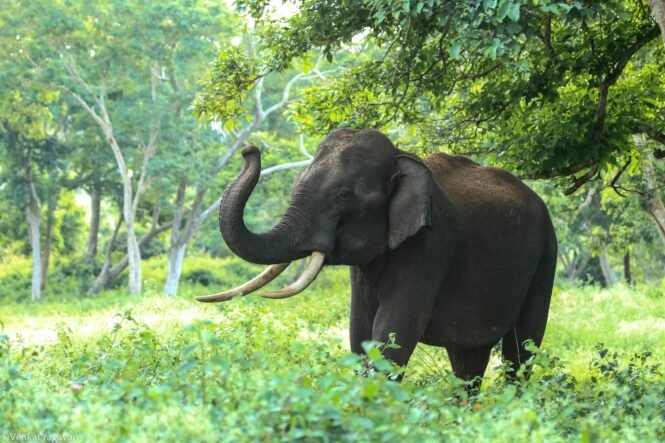
Even under today's climate conditions, the long-extinct European forest elephants could survive in Europe. This is the result of a recent study. A research team from the Department of Sports Ecology at the University of Bayreuth combined fossil finds with reconstructions of the past climate.
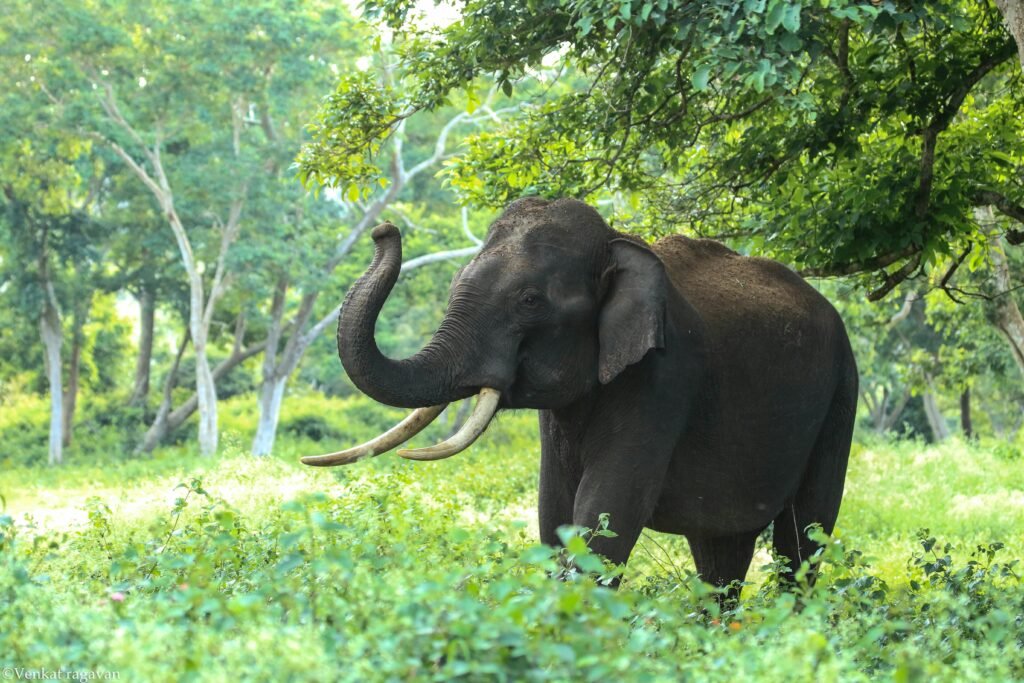
Our perception of nature is shaped by what we experience in our environment. Ecosystems without direct human influence are perceived as "natural." Considering the insights that can be gained from fossils, it becomes clear that today's ecosystems, even without direct human influence, differ significantly from the ecosystems in which the species in our landscapes evolved thousands of years ago. Studies like those conducted by the Bayreuth research team demonstrate the importance of researching past ecosystems for nature conservation: By understanding how climate and environmental changes have historically affected large mammals, conclusions can be drawn for today's conservation measures.
Elephants are among the largest land mammals on Earth and are often described as ecosystem engineers because they sustainably alter their environment through activities such as grazing, trampling, and digging. Europe, too, had its elephant: the European straight-tusked elephant ( Palaeoloxodon antiquus ) lived on our continent for approximately 700.000 years. The species survived several ice ages before being driven to extinction in the last one due to hunting by humans. During its lifetime, the European straight-tusked elephant contributed to the development of open spaces and light woodlands in the European landscape. Consequently, many native plant species are now adapted to such conditions.
“The German name ‘Waldelefant’ (forest elephant) stems from the assumption that this species preferred to live in forested regions of Europe. However, fossil finds show that P. antiquus often lived in open or semi-open habitats with mosaic-like vegetation, similar to modern elephants,” says Prof. Dr. Manuel Steinbauer, Chair of Sports Ecology at the University of Bayreuth.
To reconstruct the lifestyle of *P. antiquus* and, in particular, its actual habitat—the so-called realized niche—the research team searched scientific literature and paleontological databases for *P. antiquus* fossils that could be assigned to the so-called Marine Isotope Stages. Marine Isotope Stages are periods in Earth's history that reflect climate history, as they represent warm or cold periods. The Bayreuth research team assigned fossil finds from across Europe to a warm or cold period and, using climate models, reconstructed the realized niche of the straight-tusked elephant during these times. A comparison with modern climate data shows that straight-tusked elephants could still live in Europe today. The climate in Western and Central Europe, in particular, would be suitable for the straight-tusked elephant, with the exception of mountainous regions such as the Alps or the Caucasus.
"In the past, megafauna like the forest elephant and their control mechanisms, such as grazing, were ubiquitous. Many European species – for example, plants that prefer open land – were very likely able to establish themselves in Europe in their diversity because they benefited from these control mechanisms. Classic nature conservation strategies in Europe primarily aim to shield biodiversity from human activities through protected areas. However, this strategy is probably not able to restore the lost control mechanisms of megafauna," says Franka Gaiser, doctoral student at the Chair of Sports Ecology and lead author of the study. Modern nature conservation projects are deliberately reintroducing large herbivores to Europe. However, this is fraught with problems because the ecological processes that shaped modern ecosystems are not yet fully understood. Furthermore, today's large herbivores cannot fully assume the role of extinct megafauna because both the animals themselves and landscape structures and interactions between species have changed significantly.
original publication
Franka Gaiser, Charlotte Müller, Paula Phan, Gregor Mathes, Manuel J. Steinbauer. Europe's lost landscape sculptors: Today's potential range of the extinct elephant Palaeoloxodon antiquus. Frontiers of Biogeography 18 (2025)


