
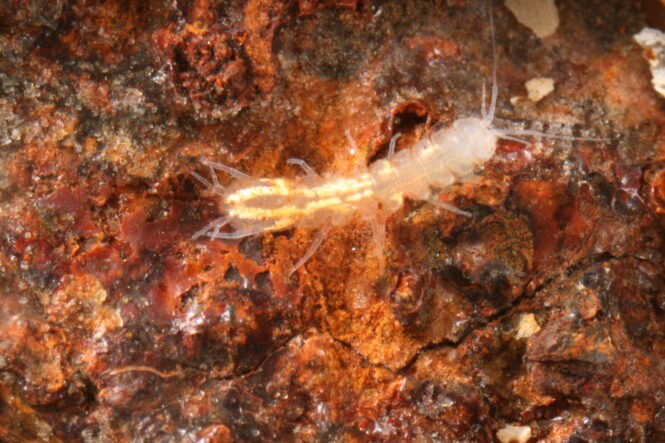
Groundwater is invisible to many – yet vital. As the largest freshwater reserve, it not only secures our drinking water supply, but it is also a fascinating habitat whose diversity and ecological significance have largely received little public attention. Scientists at the Rhineland-Palatinate University of Technology, Kaiserslautern-Landau (RPTU), in collaboration with the Rhineland-Palatinate State Institute of Education, are now seeking to change this: with a practical teacher's guide, the accompanying "groundwater kit," and the first app for recording groundwater biodiversity in Germany.
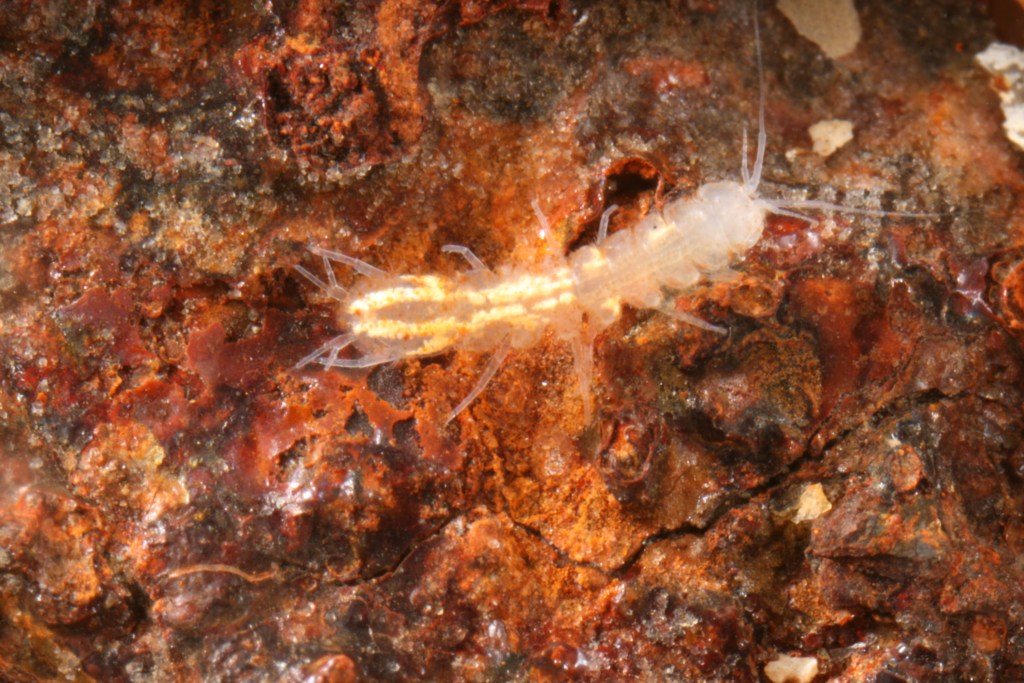
The aim of the project is to permanently integrate groundwater ecology into school and extracurricular education – and at the same time, through citizen science, i.e., the participation of citizens in research projects, to contribute to the recording of the previously little-known groundwater biodiversity in Rhineland-Palatinate. The project is supported by the German Federal Environmental Foundation (DBU) and the State Pedagogical Institute as part of the Rhineland-Palatinate's MINT strategy, building on funding from the badenova Climate and Water Protection Innovation Fund.
The groundwater kit was developed specifically for use in educational institutions. It contains a set of materials for sampling and analysis, supplemented by tailored teaching materials from the teacher's guide. Students from grade 5 and up – or interested groups at extracurricular learning centers – can use it to analyze groundwater samples, identify living organisms, and document their findings using the groundwater app. The data is fed into a central project database, thus making a valuable contribution to the scientific recording of groundwater biodiversity.
"Many people aren't even aware that there is life in groundwater," explains project leader and groundwater ecologist Hans Jürgen Hahn. "We want to change this and demonstrate how important these habitats are for our daily lives." Intact groundwater ecosystems are not only essential for clean drinking water, but also make an important contribution to biodiversity with their very special life forms.
The teacher's guide "Groundwater – The Hidden Habitat" forms the basis for the educational work in this project. It contains five teaching units with comprehensive background information, diagrams, and worksheets. This provides teachers with everything they need to integrate groundwater into their lessons: from the water cycle and groundwater organisms to groundwater protection. An important aspect is raising awareness about the conscious and responsible use of water as a resource. Having access to clean groundwater in sufficient quantities is no longer something to be taken for granted.
The teacher's manual therefore also raises awareness of the numerous everyday points of contact with water consumption – from watering the garden and washing the car to the virtual water consumption in clothing and food. It encourages students to ask questions: Does the lawn really need to be watered every day in summer, and does drinking water have to be used for this, or are there alternatives? How much water is needed to produce strawberries in arid regions like Spain or Morocco? And is the water cycle really a closed cycle – or is water lost to us as soon as it flows down the river towards the sea? The project not only imparts knowledge but also motivates students to take action and make conscious decisions.
The groundwater kit is now available for loan from the Rhineland-Palatinate State Institute of Education in Speyer – provided that teachers have previously attended a designated training course. These courses provide in-depth knowledge of groundwater ecology and demonstrate, in a practical way, how the kit can be used in the classroom. The teacher's manual and groundwater app can also be used independently of the groundwater kit and will be available free of charge from May 20th on the project website at rptu.de/s/grundwasserkoffer.
After initial pilot phases at schools in Landau, Worms, and Mainz, the groundwater kit, teacher's manual, and app have now been officially launched: At the Gymnasium am Kurfürstlichen Schloss (Electoral Palace) in Mainz, the project team presented the educational program together with Bettina Brück, State Secretary in the Ministry of Education of Rhineland-Palatinate, and the participating students from the three pilot schools. "It's great that we can offer children and young people such vivid lessons in STEM subjects and thus increase their interest in STEM. The fact that their own research results are being used for scientific purposes is particularly motivating for students," said Bettina Brück.
The project combines science communication, citizen science biodiversity research, and education in an innovative way: It raises young people's awareness of the need to protect an often overlooked resource, contributes to environmental education, and brings new insights into one of the world's most mysterious habitats directly from the subsurface. Because: "We can only protect what we know," emphasizes groundwater expert Hahn.
also read
Domino effect in the Amazon: Tipping points are being reached faster | Pugnalom
Groundwater threatened by droughts and heavy rainfall | Pugnalom


