Tag Archives: Fossils

Researchers discover unknown fossil sea turtle in Syria
By | August 18, 2025

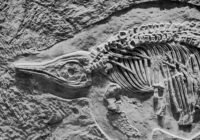
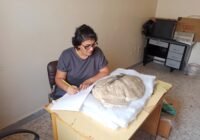
An international research team, including members from the Senckenberg Centre for Human Evolution and Palaeoenvironment at the University of Tübingen, has discovered a previously unknown fossil sea turtle near the Syrian city of Afrin. The species, newly named Syriemys lelunensis under the leadership of the University of São Paulo, dates back to the early Eocene epoch, about 50 million years ago, and is the first scientifically described… Read more »
Researchers find answer: How could life learn to live with arsenic?

By | July 15, 2025

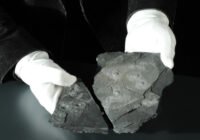
Most of life's most important strategies originated far back in Earth's history. To understand how and when living organisms began using arsenic, one has to travel an incredible 2,1 billion years into the past. In 2010, the Moroccan-French geologist Abderrazak El Albani from the University of Poitiers discovered arsenic in 2,1-billion-year-old clay shales from Gabon… Read more »

Fossils: June excavation at Bromacker yields spectacular new finds

By | June 23, 2025

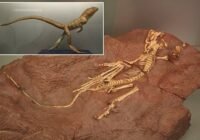
This year's June excavation at the Bromacker fossil site in Thuringia was once again a resounding success, yielding fantastic finds. A layer of bones, microskeletons, and an ash layer suitable for age determination promise new insights into the 290-million-year-old Bromacker ecosystem. Over 1400 people – in just 18 days of excavation, and outside of the Thuringian summer holidays – took advantage of the opportunity… Read more »

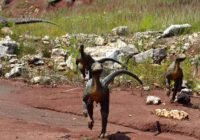
Fossil traces show: Lizards 290 million years ago were sociable

An international research team from the Museum für Naturkunde Berlin, Magdeburg, and Paris has, for the first time, examined resting marks with skin impressions of early mammal relatives. The 290-million-year-old trace fossils were discovered over 100 years ago in the Tambach sandstone of the famous Bromacker fossil site in the UNESCO Geopark Thuringia and have been re-examined as part of the ongoing BROMACKER research project. These geologically oldest resting marks of early mammal relatives provide… Read more »

Evolution: Highly efficient eyes discovered in two more insect larvae

By | March 4, 2025

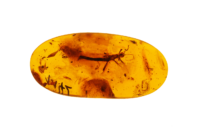
Adult insects are known for their fascinating compound eyes, which enable them to perform remarkable sensory feats, for example, when searching for food or a mate. However, these eyes are not yet developed in many insect larvae. "They usually only need simple eyes, the so-called stemmata, because at this stage of their lives they are often just little eating machines," explains Carolin Haug, a senior lecturer and zoologist at the Faculty of… Read more »

Messel Pit still provides endless fossils and celebrates several anniversaries in 2025

By | January 22, 2025

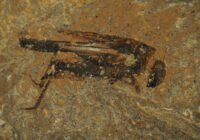
The Messel Pit is celebrating several anniversaries in 2025 and is once again in the spotlight of research with a new special issue of the journal "Palaeobiodiversity and Palaeoenvironments." The publication presents current findings on fossils from the Hessian fossil site and comparable locations. The studies reveal the extraordinary diversity of the approximately 47-million-year-old fossils in the UNESCO World Heritage Site of the Messel Pit. Highlights include… Read more »

Messel Pit: not all fossils recovered yet

By | January 13, 2025

Senckenberg researchers have revealed in a newly published study that a total of 1.409 different taxa – various types of organisms – have been recovered from the 47-million-year-old oil shale deposits in the Messel Pit. The team explains that biodiversity during the Eocene epoch in Messel was higher than in present-day Central Europe, but lower than in modern tropical habitats. [ Continue reading »]

Paleontology: “Punk” and “Emo” turn mollusk history on its head

By | January 10, 2025

Early mollusks were more complex than previously thought. An international research team, including Senckenberg malacologist Prof. Dr. Julia Sigwart, has examined two newly discovered mollusk fossils that challenge our current understanding of prehistoric mollusks. Their study, now published in the renowned journal "Nature" and led by Dr. Mark Sutton of Imperial College London, shows that early mollusks were more complex and adaptable than previously assumed.… Read more »